



Summary
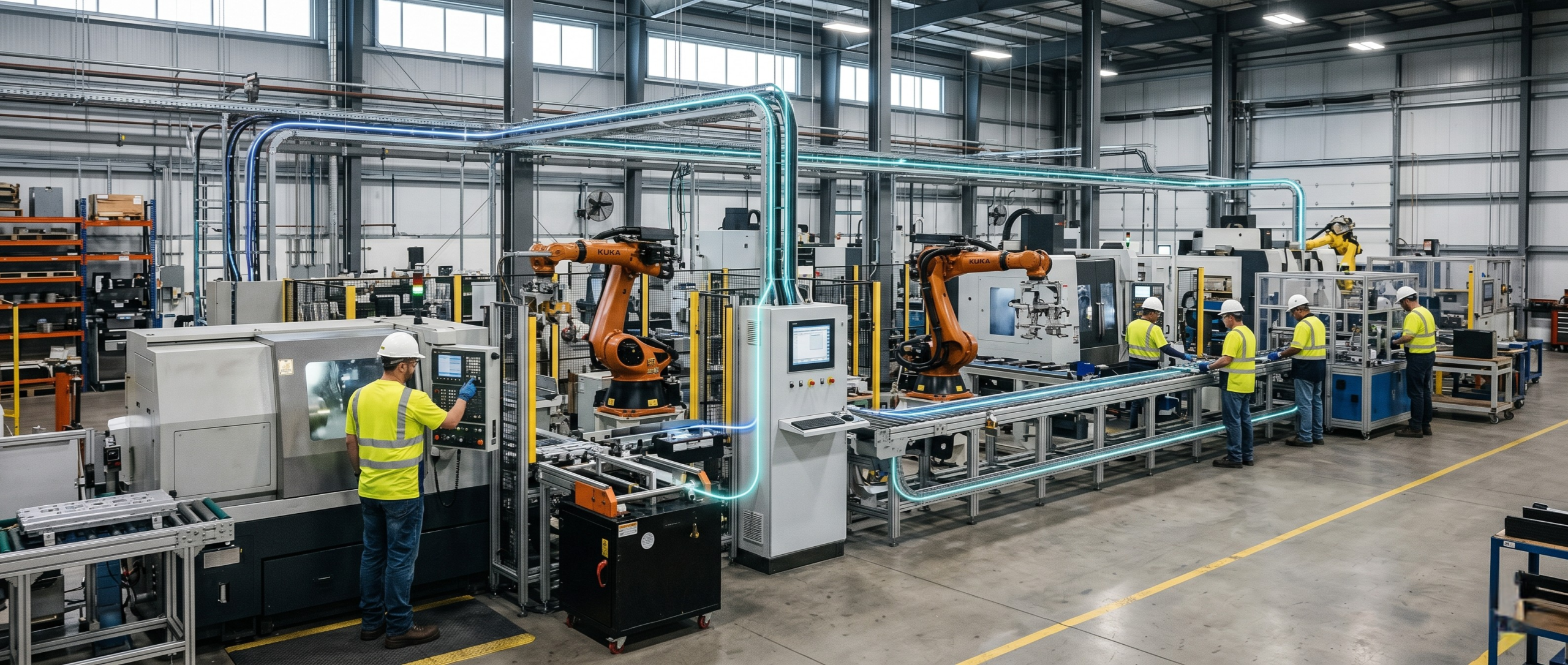
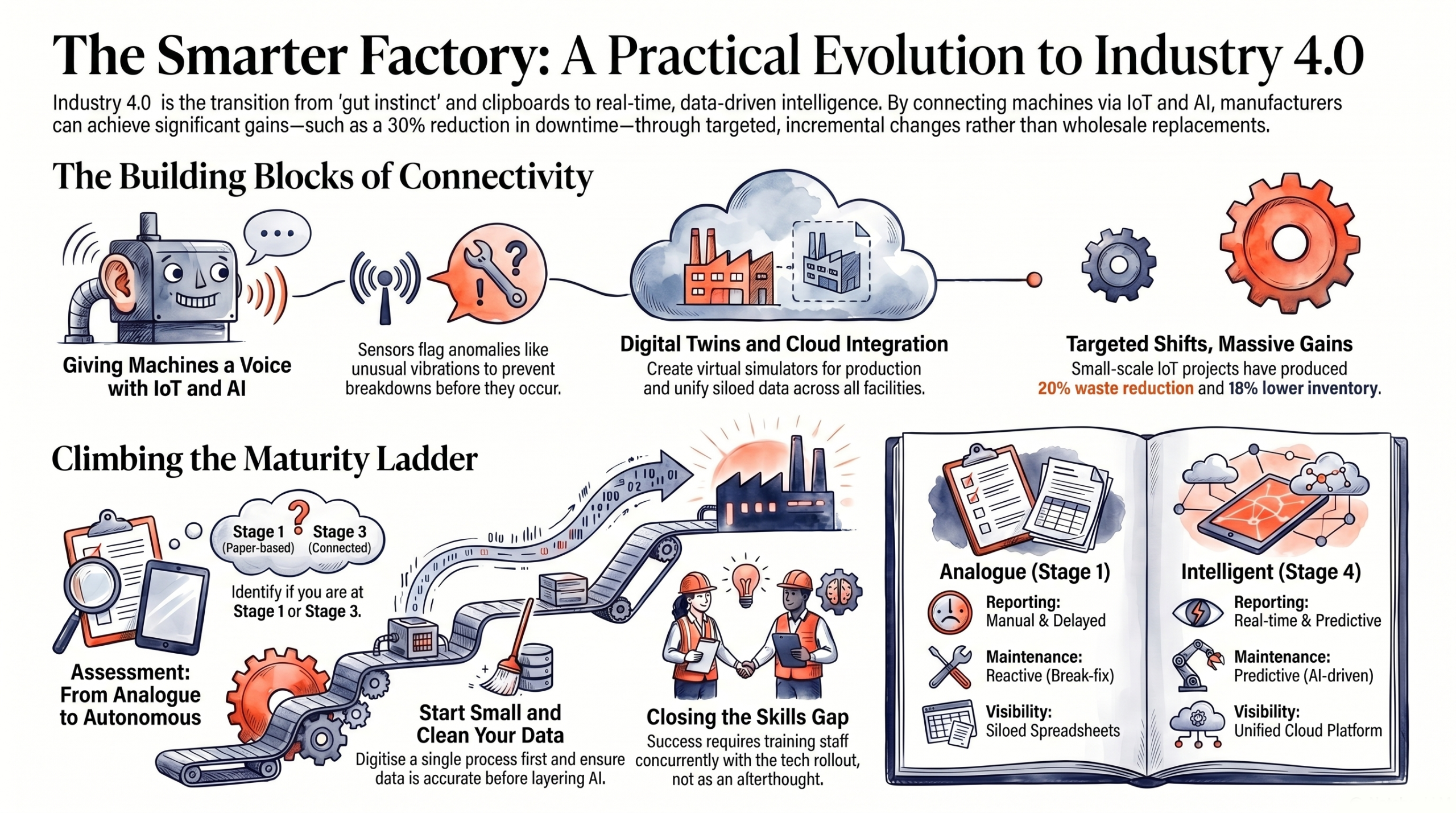
Industry 4.0 means connecting machines, sensors and software so factories share real‑time data and make smarter decisions. Manufacturers of any size can adopt targeted, affordable changes (IoT sensors, AI, digital twins, cloud, robotics) to cut waste, reduce downtime and improve productivity.
Start by assessing your maturity (Analogue → Autonomous), pick one process to digitise, clean your data, train staff, then scale. Acumatica’s cloud ERP helps mid‑market manufacturers unify production, inventory and finance to move from siloed systems to data‑driven operations.
Key points
- What it is: Industry 4.0 links factory floor devices and systems to provide real‑time visibility and predictive insights rather than delayed, manual reporting.
- Core technologies: Industrial IoT, AI/predictive maintenance, digital twins, cloud manufacturing, and advanced/collaborative robotics.
- Proven impact: Targeted projects (not full rebuilds) have produced large gains, e.g., 20% waste reduction, 18% lower inventory, 30% less unplanned downtime.
- Common barriers: Cost concerns, legacy equipment, skills gaps and poor data quality, all solvable with staged approaches, middleware sensors, training and data cleansing.
- Maturity model & next steps: Assess stage (1–5), start with a single process improvement, ensure clean data and concurrent training, then scale. Tools like Acumatica can integrate shop floor and back office to accelerate moving from siloed systems to intelligent operations.
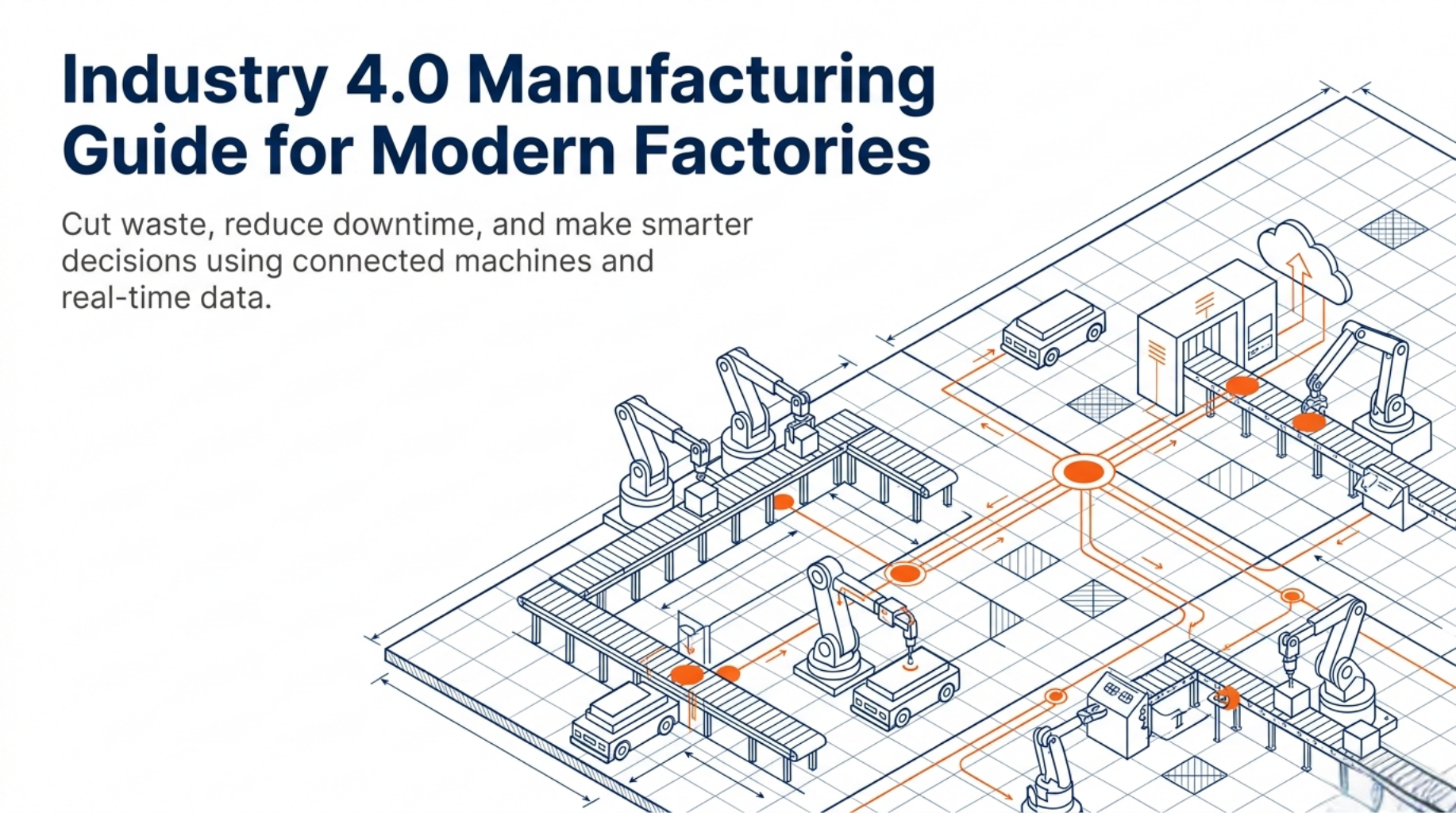
Industry 4.0 manufacturing is no longer a concept reserved for large corporations with deep pockets. Manufacturers of every size are using smart technology to cut waste, reduce downtime, and outpace competitors who still rely on manual processes and gut instinct.
If your factory runs on clipboards and spreadsheets, you are already behind. This guide explains what Industry 4.0 is, which technologies drive it, where real manufacturers have seen results, and how to figure out where your business stands today.
What Is Industry 4.0, and Why Does It Matter?
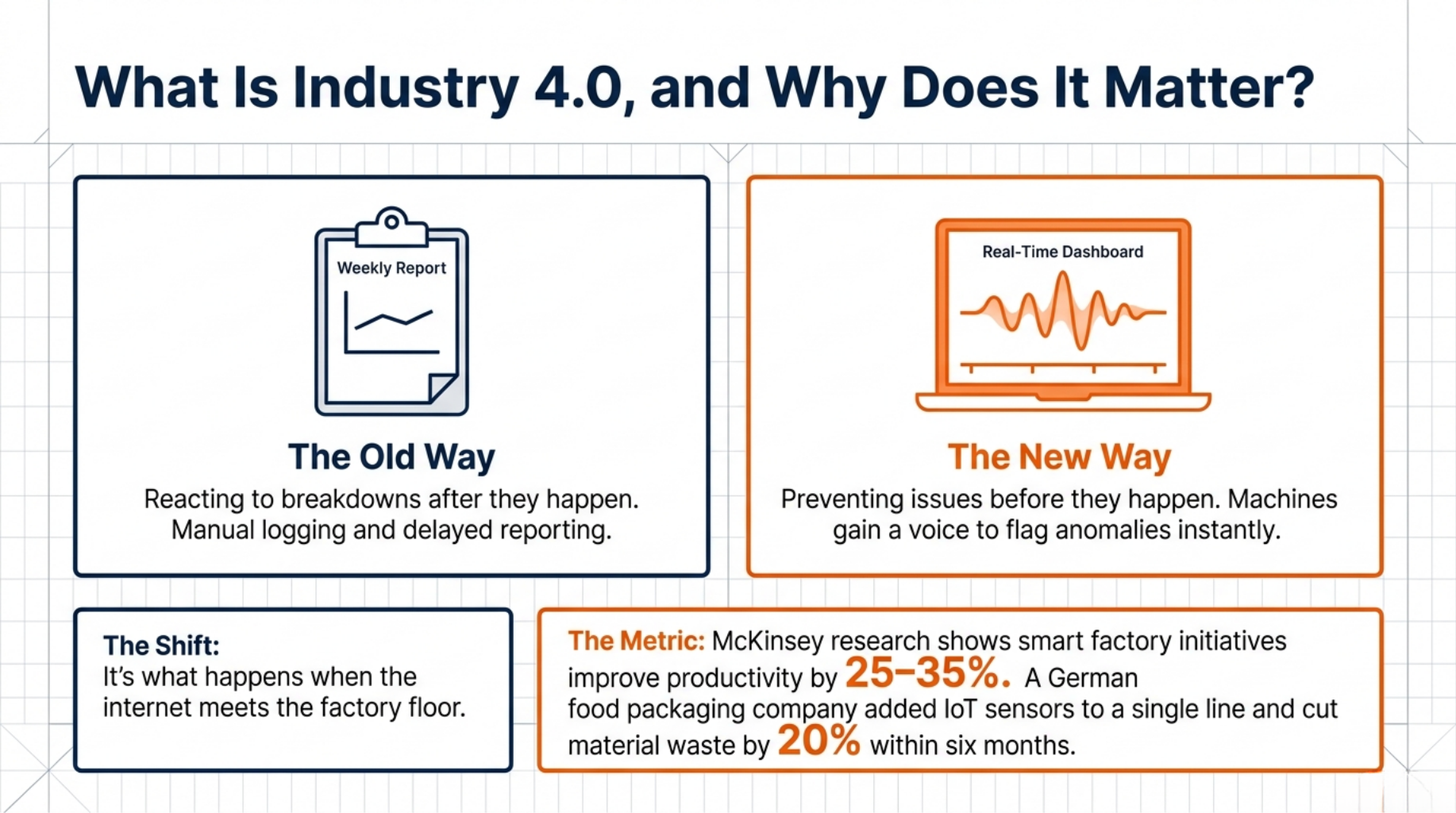
Industry 4.0 is what happens when the internet meets the factory floor. Machines, sensors, and software connect to share data in real time, so instead of waiting for a weekly report to spot a problem, you see it the moment it starts. It is the difference between reacting to a breakdown and preventing it before it happens.
The shift is not just about speed. It is about intelligence. Earlier industrial revolutions gave manufacturers better tools and faster machines. Industry 4.0 gives those machines a voice. They report on their own performance, flag anomalies, and feed data into systems that help managers make better decisions.
The good news for smaller manufacturers is that this does not require a full factory rebuild. McKinsey research found that smart factory initiatives can improve productivity by 25–35%, and most of those gains come from targeted changes, not wholesale transformation. A food packaging company in Germany, for example, added IoT sensors to a single production line and cut material waste by 20% within six months. You do not need to do everything at once.
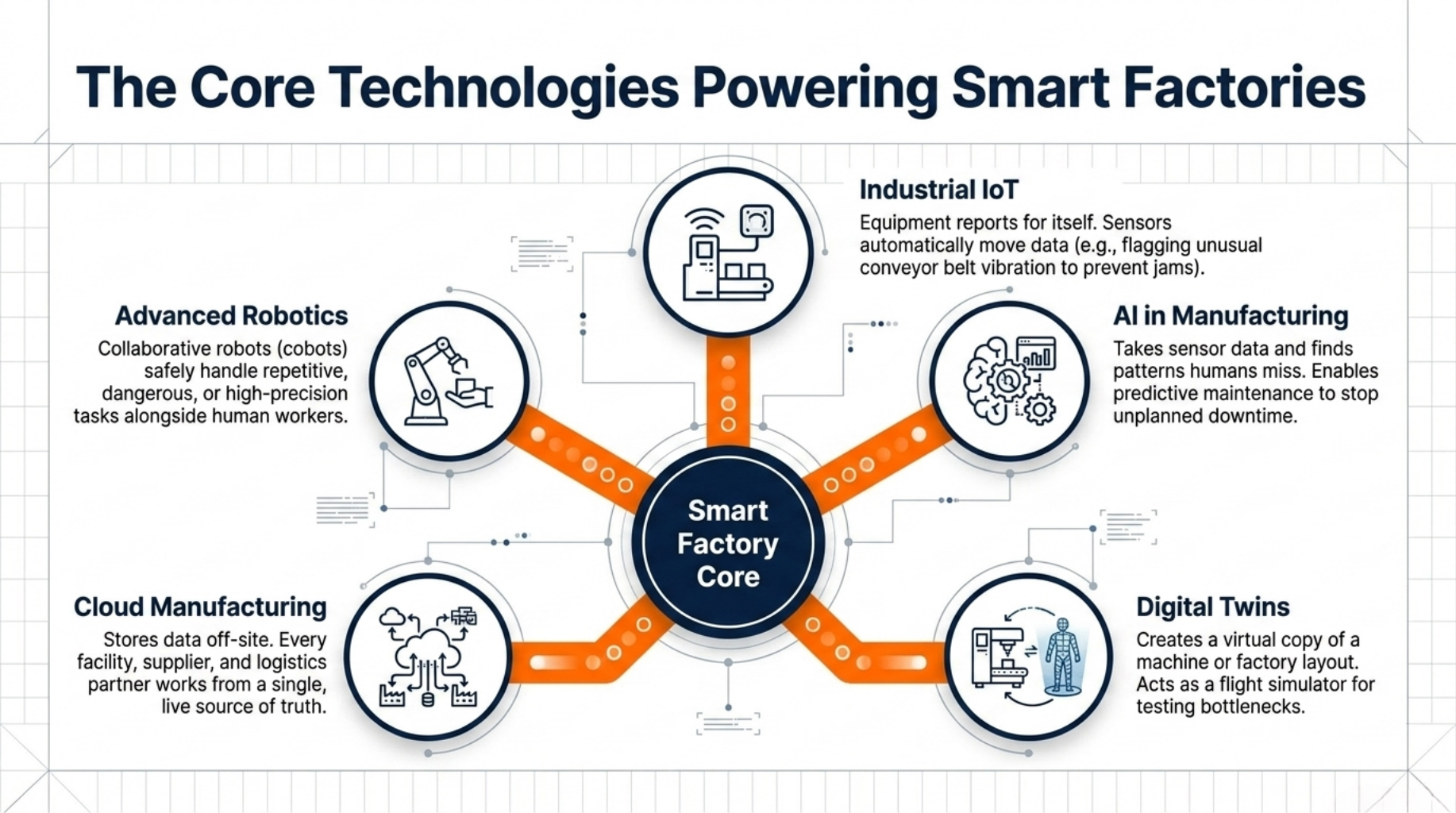
The Core Technologies Powering Smart Factories
Five technologies sit at the heart of every connected manufacturing operation.
Industrial IoT connects your machines and sensors, so data moves automatically, no manual logging, no end-of-shift data entry. Think of it as giving your equipment the ability to report for itself. A sensor on a conveyor belt can flag unusual vibration before it causes a jam.
AI in manufacturing takes that sensor data and finds patterns a human would miss. It can tell you that a specific machine tends to fail on the third shift after six hours of continuous use. That is predictive maintenance in action, and it keeps unplanned downtime from derailing your output.
Digital twins create a virtual copy of a machine, process, or even an entire factory. Engineers can test a new production layout or simulate a bottleneck scenario without touching the physical floor. It is like a flight simulator for your operations.
Cloud manufacturing stores and processes data off-site, so every facility, supplier, and logistics partner works from the same live information. No more version-control chaos or siloed spreadsheets.
Advanced robotics handles the repetitive, dangerous, or high-precision tasks that slow human workers down or put them at risk. Modern collaborative robots (cobots) work alongside people rather than replacing them.
PwC research indicates that the vast majority of industrial companies plan to increase their level of digitalisation significantly in the coming years, with Industrial IoT investment leading that spend. These five technologies are the building blocks of that shift.
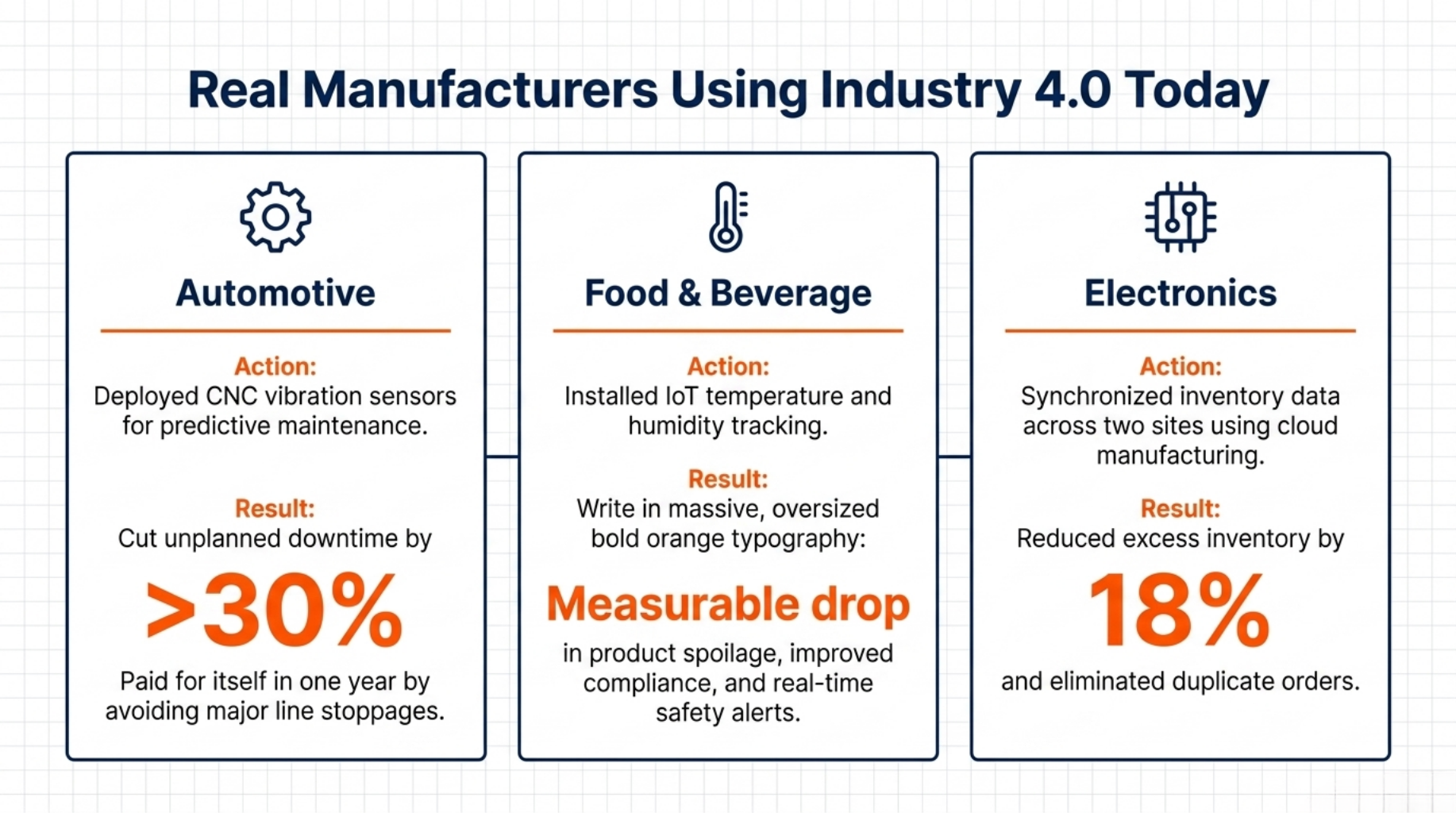
Real Manufacturers Using Industry 4.0 Today
The World Economic Forum’s Lighthouse Factory programme identifies manufacturers that have moved beyond pilot projects to achieve scaled, measurable results. Their findings make a strong case that Industry 4.0 works across sectors, not just in high-budget automotive plants.
Automotive: A mid-sized auto parts supplier deployed vibration sensors across its CNC machines and used predictive maintenance alerts to cut unplanned downtime by over 30%. The system paid for itself within the first year by avoiding two major line stoppages.
Food and beverage: A European food manufacturer installed IoT temperature and humidity monitoring across its cold storage and processing lines. The result was a measurable drop in product spoilage, improved regulatory compliance tracking, and real-time alerts when conditions drifted outside safe ranges.
Electronics: A small electronics assembler with two facilities used cloud manufacturing to synchronise inventory data across both sites. Previously, each site managed its own stock independently, leading to duplicate orders and shortages. After connecting the two through a shared cloud platform, the business reduced excess inventory by 18% and improved on-time delivery.
These are not outlier results. They are what happens when manufacturers commit to one targeted improvement, measure it, and build from there.
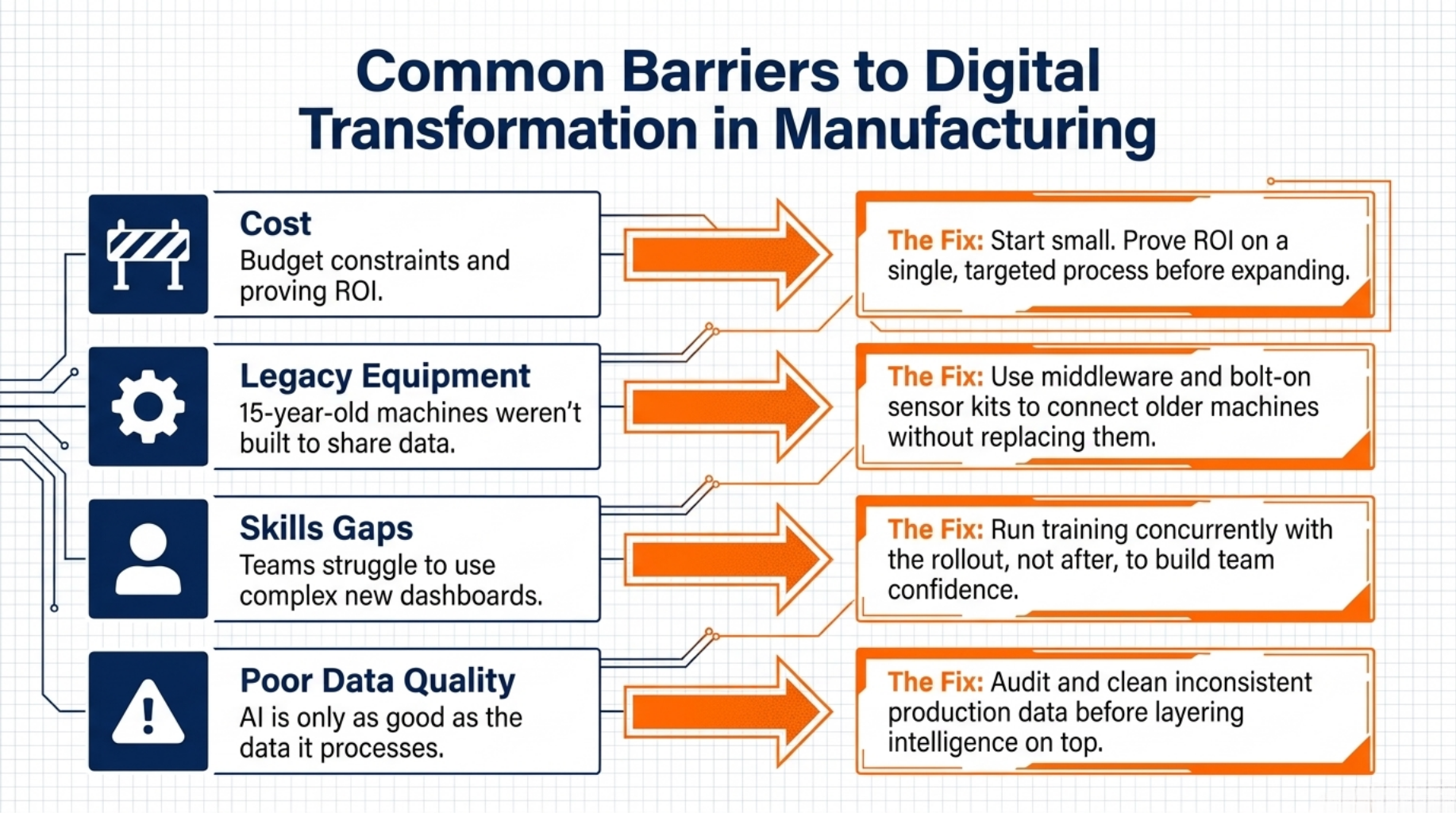
Common Barriers to Digital Transformation in Manufacturing
Most manufacturers do not stall because the technology is too complex. They stall because they try to do too much at once, or they cannot see a clear return on the investment. Let us be honest about what actually gets in the way.
Cost is the most cited concern among small and mid-sized manufacturers. The Manufacturers Alliance has consistently found that budget constraints rank as the top barrier to digital adoption, not lack of interest. The fix is not to find more money; it is to start smaller and prove ROI on one process before expanding.
Legacy equipment creates a real integration challenge. A machine purchased fifteen years ago was not built to share data. But that does not mean it is useless, middleware solutions and bolt-on sensor kits can bring older equipment into a connected system without replacing it entirely.
Skills gaps mean that even when new tools are in place, teams struggle to use them. A dashboard no one understands is no better than a spreadsheet. Training must run alongside the rollout, not after it.
Poor data quality is the hidden barrier. AI and analytics tools are only as good as the data they process. If your production data is inconsistent or incomplete, clean it before you layer intelligence on top of it.
None of these barriers are permanent. They are problems with known solutions.
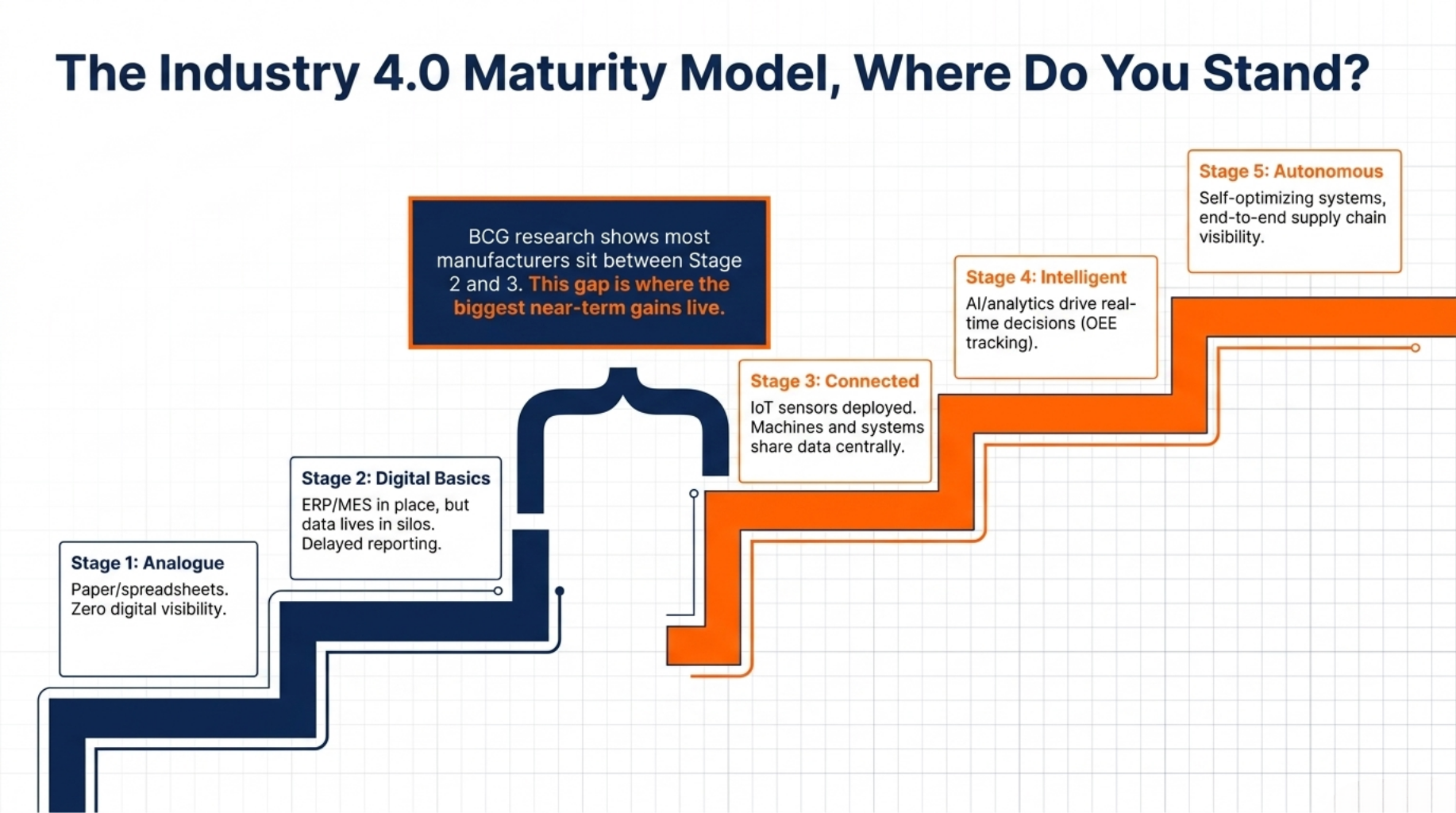
The Industry 4.0 Maturity Model, Where Do You Stand?
Before you invest in new technology, you need to know where you are starting from. This five-stage model gives you a plain-language framework to assess your current position and identify your next move.
- Stage 1, Analogue: Processes are paper-based or managed in basic spreadsheets. There is little to no digital visibility into production performance.
- Stage 2, Digital Basics: An ERP or manufacturing execution system (MES) is in place, but data lives in silos. Reporting is manual and delayed.
- Stage 3, Connected: Machines and systems share data. IoT sensors are deployed and feeding into a central platform.
- Stage 4, Intelligent: AI and analytics drive operational decisions in real time. OEE (overall equipment effectiveness) is tracked and acted on continuously.
- Stage 5, Autonomous: Systems self-optimise with minimal human intervention. Supply chain visibility extends to partners and customers.
BCG research suggests that most manufacturers currently sit between Stage 2 and Stage 3, they have basic digital systems but have not yet connected them into a coherent data flow. That gap between Stage 2 and Stage 3 is where the biggest near-term gains live.
How to Move Up the Maturity Ladder
Moving up does not require a five-year transformation programme. Pick one production process, digitise it, and measure the result. Before you add AI or analytics tools, audit the data that process produces, clean, consistent data is the foundation everything else depends on. Roll out training at the same time as the technology, not afterwards, so your team builds confidence as the system goes live.
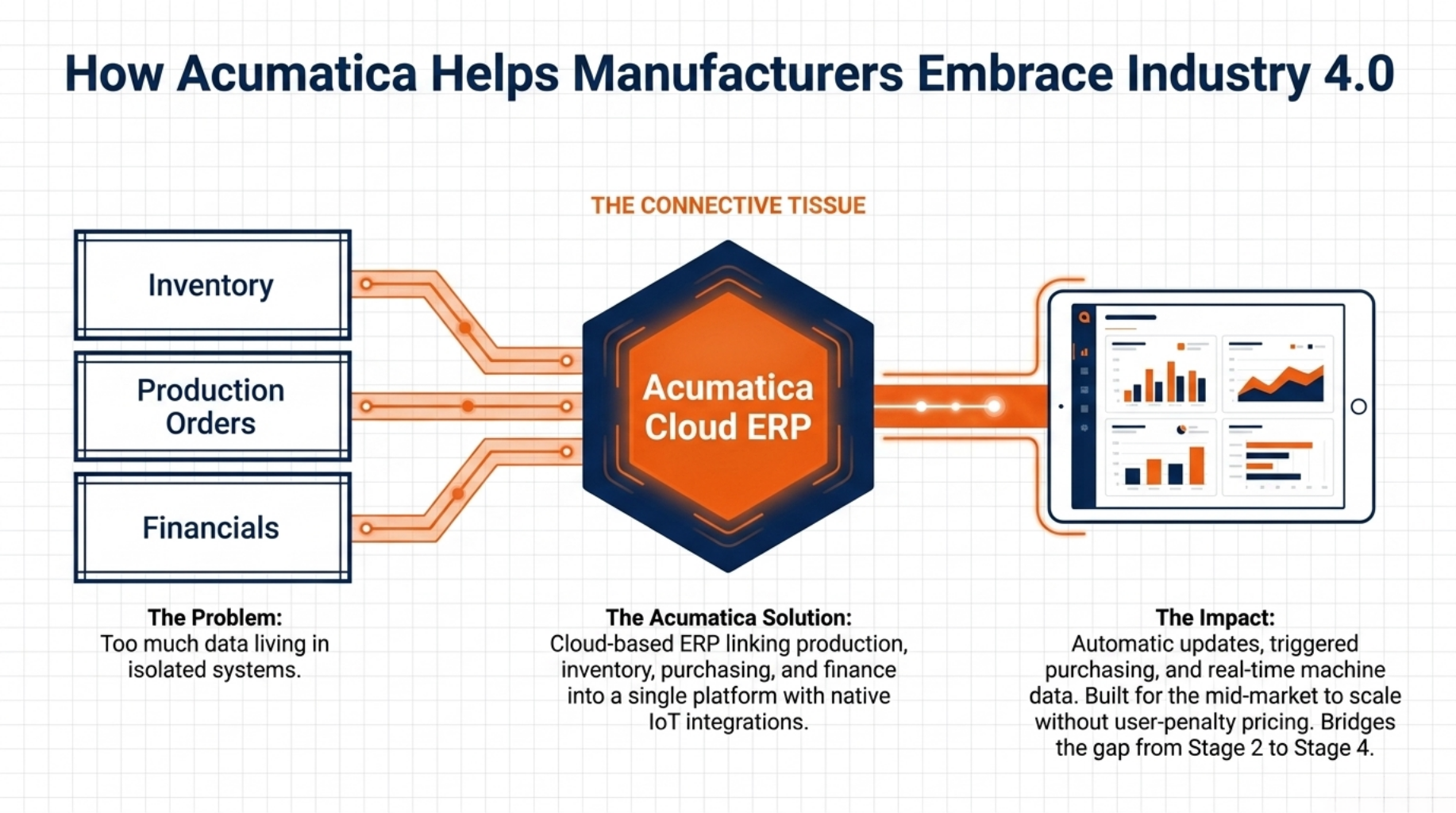
How Acumatica Helps Manufacturers Embrace Industry 4.0
Most manufacturers have more data than they know what to do with. The problem is that it lives in too many places, one system for inventory, another for production orders, a spreadsheet for financials. Acumatica acts as the connective tissue that pulls it all together.
Acumatica’s cloud-based ERP links production, inventory, purchasing, and financials into a single platform. When a production order is raised, inventory levels update automatically. When materials run low, purchasing is triggered. Every action on the shop floor is visible in the back office without manual re-entry.
Its native integrations with IoT data sources and manufacturing tools mean that real-time machine data does not sit in isolation, it feeds directly into the dashboards and alerts that operation managers use every day. That is how you move from Stage 2 (siloed digital basics) to Stage 4 (intelligent, data-driven decisions).
One Acumatica manufacturing customer, a mid-market industrial equipment maker, reported a significant reduction in manual data entry hours after implementation, alongside measurable improvements in inventory accuracy and order fulfilment speed. The business scaled without adding headcount to its operations team.
Acumatica is built for mid-market manufacturers. It scales as the business grows, and its pricing model does not penalise you for adding users, which matters when you are trying to get an entire team onto one platform. For manufacturers stuck between Stage 2 and Stage 3, it is a practical path forward.
Wrapping Up
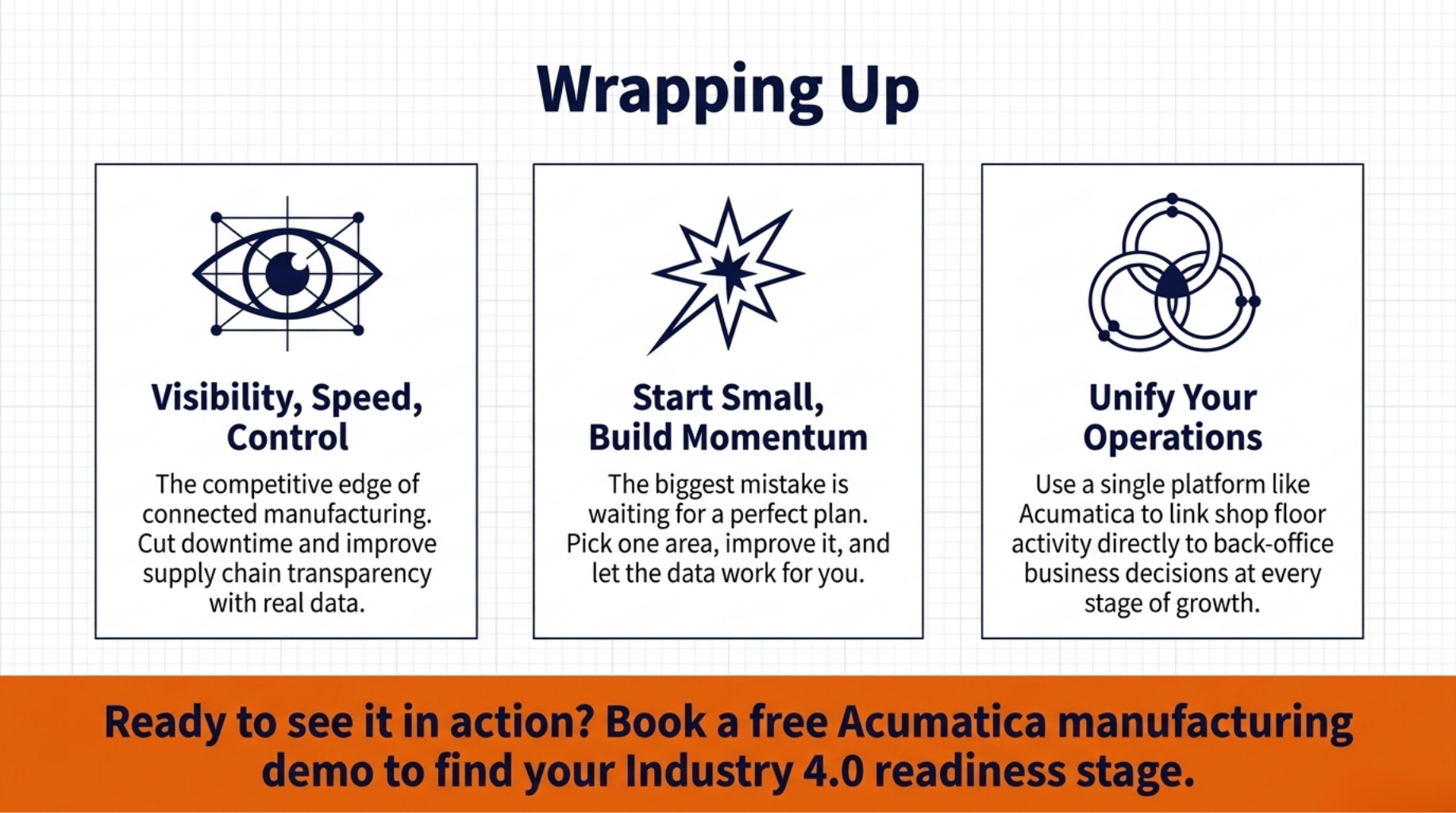
Industry 4.0 manufacturing gives businesses the visibility, speed, and control they need to compete, whether that means cutting downtime, improving supply chain transparency, or making faster decisions with real data.
The technology is proven. The barriers are real but solvable. And the biggest mistake most manufacturers make is waiting until they have a perfect plan instead of starting with one process and building momentum.
Use the maturity model to find where you stand. Pick one area to improve. Then connect your systems, so your data works for you.
Acumatica gives manufacturers a single platform to do exactly that, linking shop floor activity to business decisions at every stage of growth.
Ready to see it in action? Book a free Acumatica manufacturing demo and find out which stage of Industry 4.0 readiness your factory is at, and what your next step looks like.
FAQ
Q1: What is Industry 4.0, and how does it affect manufacturing?
A: Industry 4.0 is the integration of digital technologies like IoT, AI, and cloud systems into manufacturing to improve efficiency, visibility, and decision-making.
Q2: How do small and mid-sized manufacturers start a digital transformation?
A: Start by assessing your current maturity level, then pick one high-impact process to digitise before scaling across the operation.
Q3: What technologies are used in a smart factory?
A: Smart factories use Industrial IoT sensors, AI analytics, digital twins, cloud platforms, and advanced robotics to connect and automate production.
Q4: What are the biggest barriers to Industry 4.0 adoption for manufacturers?
A: The most common barriers are upfront costs, legacy equipment limitations, skills gaps, and poor data quality that makes analytics unreliable.
Q5: How does cloud manufacturing support Industry 4.0?
A: Cloud manufacturing stores and shares production data across sites and partners in real time, making connected manufacturing possible without on-premise infrastructure.