



Summary
The article explains that poor production scheduling creates hidden costs like overtime, rework, downtime, and missed delivery dates. It argues that better scheduling should be based on real capacity, realistic lead times, and built-in buffers rather than optimistic assumptions. It also highlights how connected ERP tools like Acumatica can improve visibility and scheduling accuracy.
Key points
- Rushed schedules often backfire by causing defects, delays, and rework across the whole production line.
- Realistic capacity planning and buffer time help plants absorb disruptions without derailing the schedule.
- Accurate lead times and better communication between sales and operations improve on-time delivery and reduce stress on teams.
- Acumatica’s manufacturing tools provide real-time visibility into work orders, inventory, and capacity, helping manufacturers build better schedules.
Production scheduling should help a plant move faster, but bad schedules often do the opposite. When the plan is too tight, one delay turns into rework, overtime, and late orders, which is why poor scheduling creates hidden costs across overtime, downtime, waste, and customer penalties. Good scheduling also supports better customer service and lower production time and cost by matching labour, machines, and materials to the work that must be done.
This matters because rushed plans rarely fail in one place only. They spread pressure across the whole line, especially when teams work from outdated data, guess at lead time, or promise work that capacity cannot support. A realistic schedule, built around true capacity and clear buffers, gives plant managers a practical way to improve on-time delivery without pushing the team past its limit.
This is where the chain of cause and effect becomes clear.
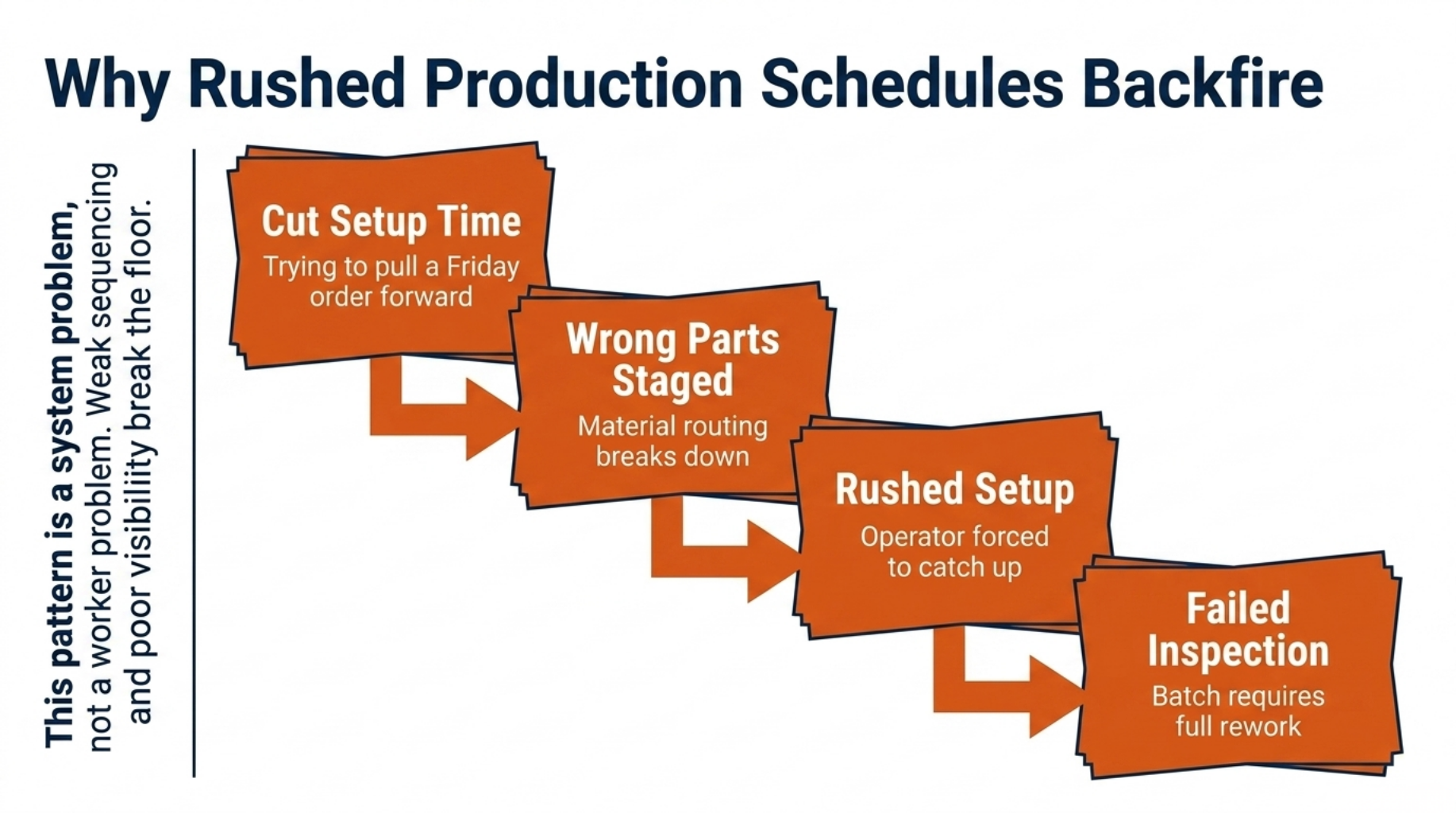
Why Rushed Production Schedules Backfire
A rushed schedule looks efficient on paper, but it often breaks down on the floor. When setup time is cut, checks are skipped, and materials are staged quickly, the result is more defects, more waiting, and more jobs pushed into the next shift, all of which are common hidden costs of poor production scheduling.
Picture a small fabrication shop trying to pull a Friday order forward by half a day. The planner moves the job ahead, but the wrong parts arrive at the machine, the operator waits, and the team then rushes the setup to catch up; by the end of the shift, the batch fails inspection and has to be reworked. That pattern is not a worker problem, but a system problem caused by weak sequencing, poor visibility, and work released before the line is ready.
The damage keeps growing because one rushed task affects the next one. Production scheduling is meant to assign time, people, and machines in the right order, and when that order breaks, throughput drops and delivery dates slip. Better scheduling helps reduce labour waste, time loss, and delivery problems by improving planning across the full process.
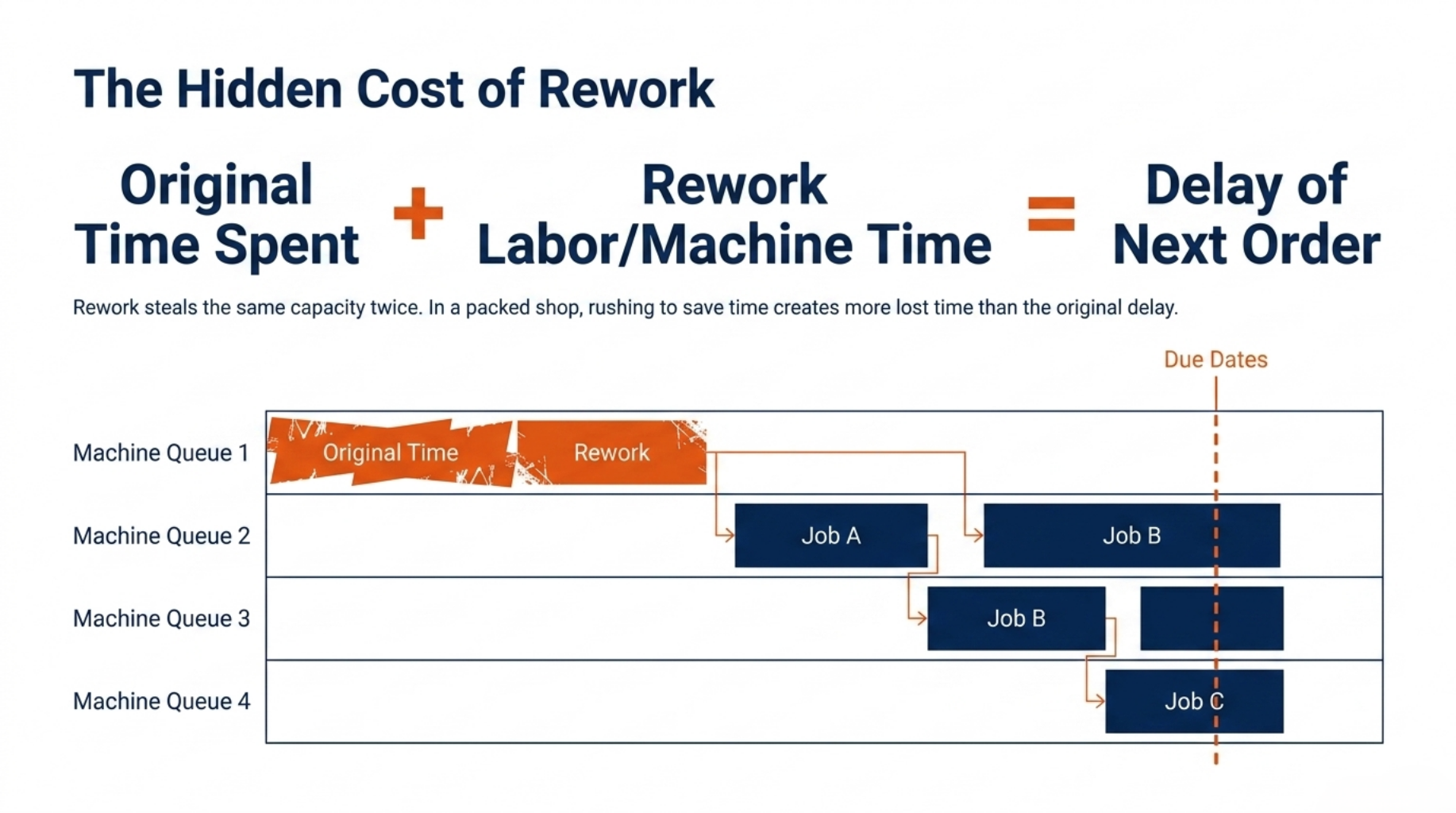
The Hidden Cost of Rework
Rework is costly because it steals the same capacity twice. A part that must be rebuilt uses extra material, but it also takes labour hours and machine time that were already promised to another job, which makes the next delay more likely.
That is why one quality issue can push several later orders past their due dates. In a packed shop, a failed batch can block the work centre, delay inspection, and force supervisors to reshuffle other work orders just to keep urgent jobs moving, which turns one mistake into a chain of missed handoffs and late completions. The result is simple: rushing to save time often creates more lost time than the original delay.
That points to a deeper issue than speed alone.
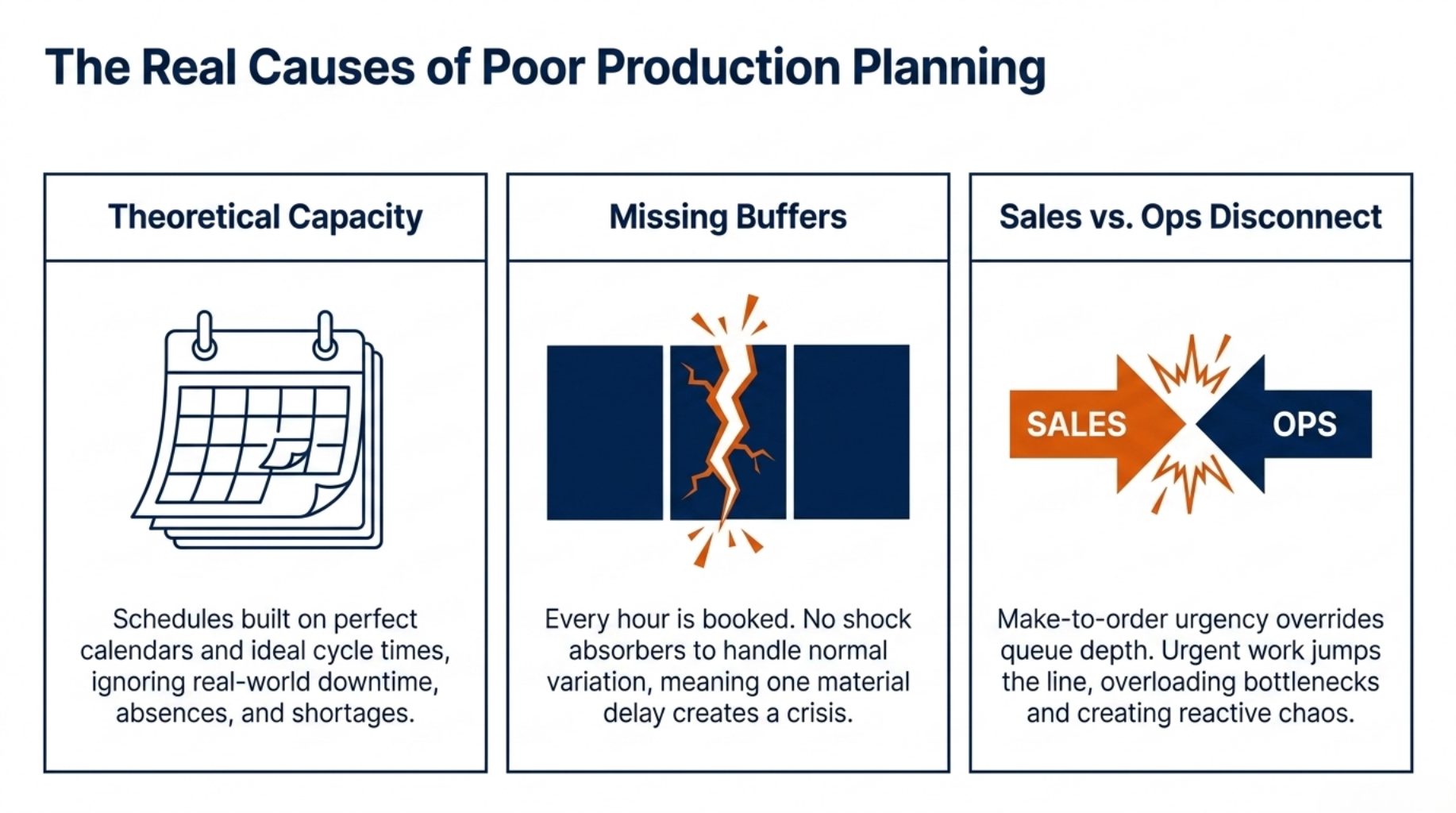
The Real Causes of Poor Production Planning
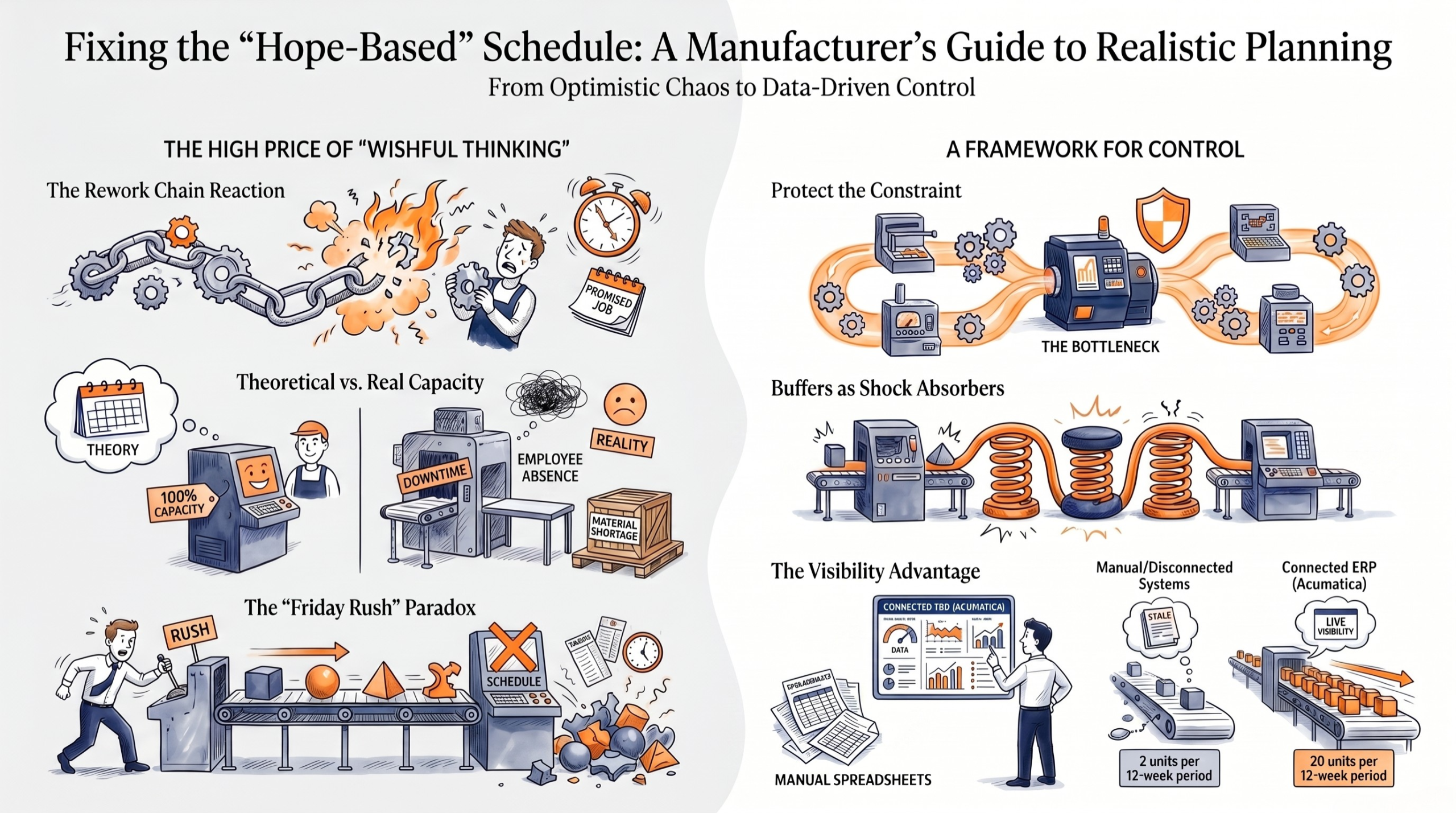
Poor production planning usually starts long before the first machine runs. Many schedules are built from theoretical capacity, clean calendars, and ideal cycle times, even though real plants deal with downtime, absences, shortages, and changing demand, which is why capacity planning matters for on-time delivery.
Another common cause is missing buffer time. When every hour is booked as if nothing will go wrong, a short material delay or one failed inspection can turn the whole day into a crisis because there is no room in the plan to absorb normal variation. A third cause is weak communication between sales and operations, which leads to promises the floor cannot meet with the resources available.
A clear example is a make-to-order plant that books urgent work after a sales call without checking queue depth at the bottleneck. The new job looks small, but it jumps ahead of three other orders, overloads a key machine, and leaves supervisors reacting to problems instead of running the plan. This is why production planning must reflect what the floor can truly do, not what the spreadsheet hopes it can do.
That is where capacity planning becomes the line between control and chaos.
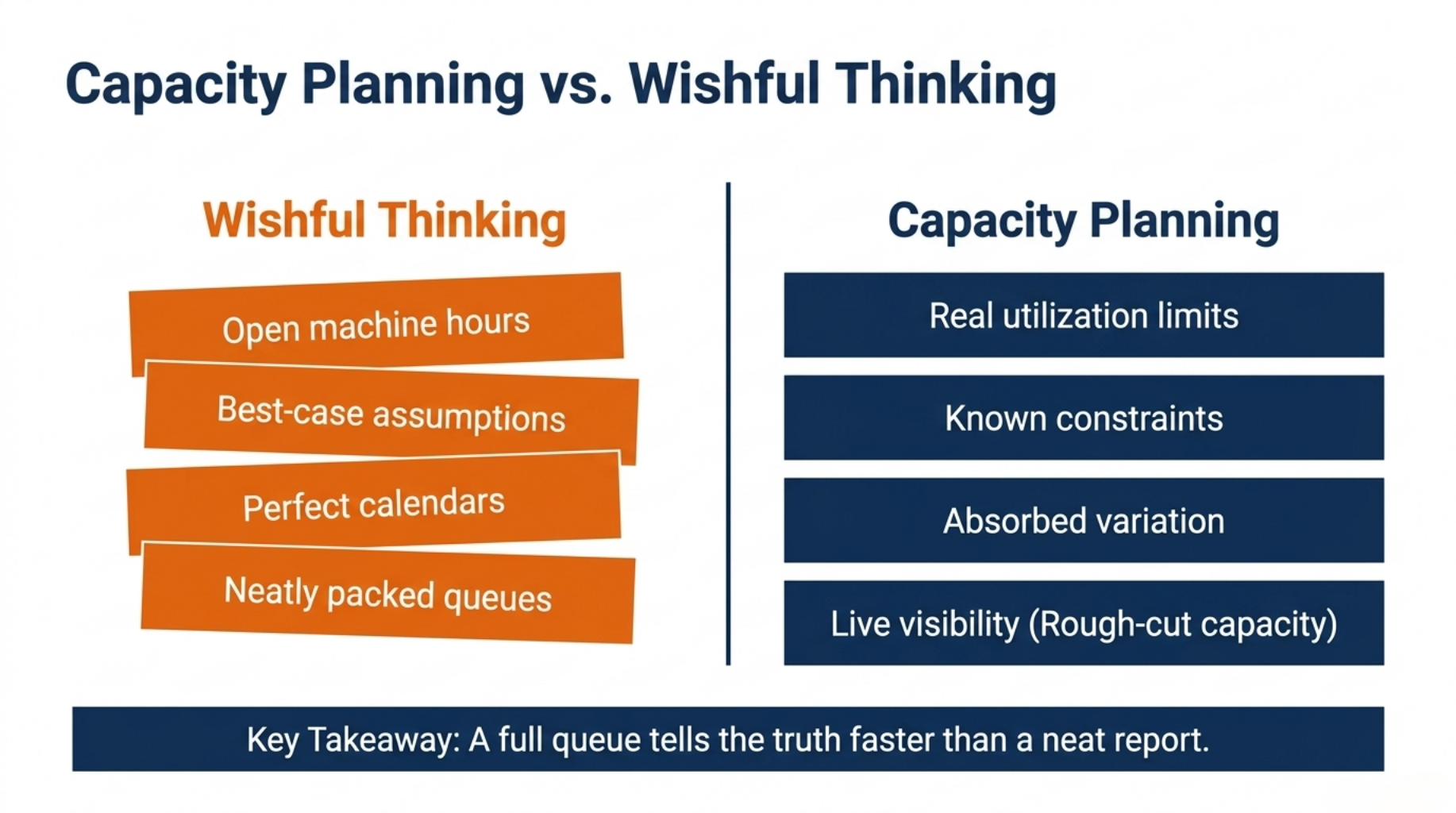
Capacity Planning vs. Wishful Thinking
Capacity planning is not the same as counting open machine hours. It means estimating how much work the system can handle in a period, then managing that load, so resources are not overloaded or left idle.
In practice, that means using real utilisation, queue depth, and known constraints rather than best-case assumptions. Rough-cut capacity planning helps firms see whether they have enough capacity to meet the schedule and take action before delivery performance slips, which is far more useful than building a perfect-looking plan that fails on day one. Plant managers need live visibility at each work centre because a full queue tells the truth faster than a neat report.
The next step is to build the schedule around that truth.
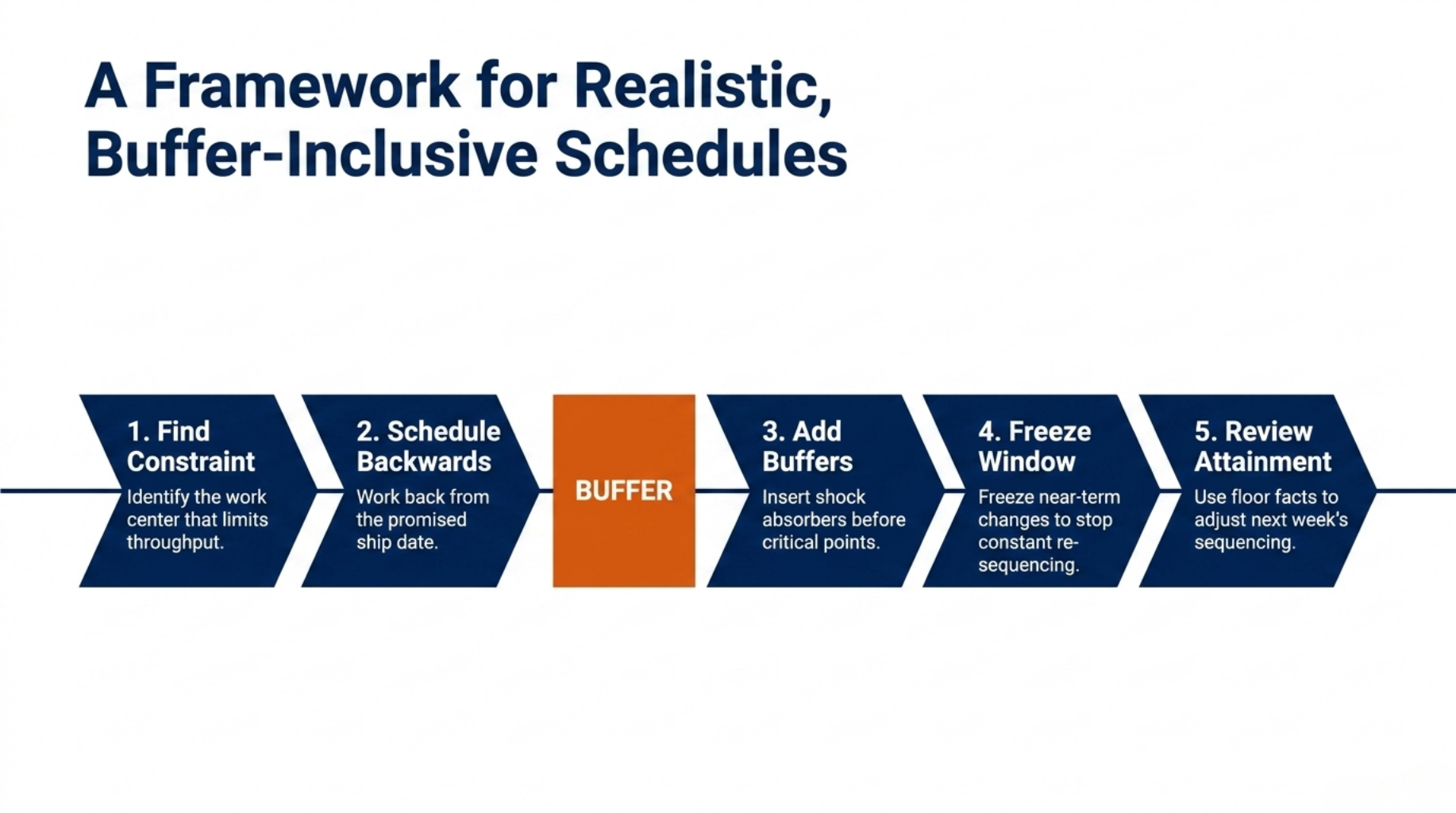
A Framework for Realistic, Buffer-Inclusive Schedules
The fastest way to improve production scheduling is to stop building it around hope. A stronger method starts with the constraint, works back from the ship date, adds buffers before critical points, freezes near-term changes, and then reviews schedule performance often enough to learn from what happened.
Step one is to find the work centre that limits throughput. In most plants, one machine, line, or skilled team sets the pace for everything else, so the schedule must protect that point first if the goal is steady flow. Step two is to schedule backwards from the promised ship date, so each stage has a purpose and a deadline tied to customer need rather than internal habit.
Step three is to add buffers before the constraint and before final assembly. Those buffers are not wasted time; they are shock absorbers that keep one small problem from damaging the whole order stream. Step four is to freeze the near-term schedule for a short rolling window, so supervisors are not forced to re-sequence jobs every few hours, which cuts churn and protects work order management.
Step five is to review schedule attainment each week. If one line misses the plan often, use actual data to change job sequencing, lead times, or buffer size instead of repeating the same pattern and expecting a better result. This is one of the clearest answers to how to improve production scheduling in manufacturing: use facts from the floor to shape the next plan.
A practical shop example helps here. A metal shop with one overloaded laser cutter can place a buffer before that machine, release jobs in a tighter order, and stop moving rush work ahead of every other order; that simple change often protects throughput more than adding another meeting or chasing the team harder.
Lead time is the next piece that makes the framework hold.
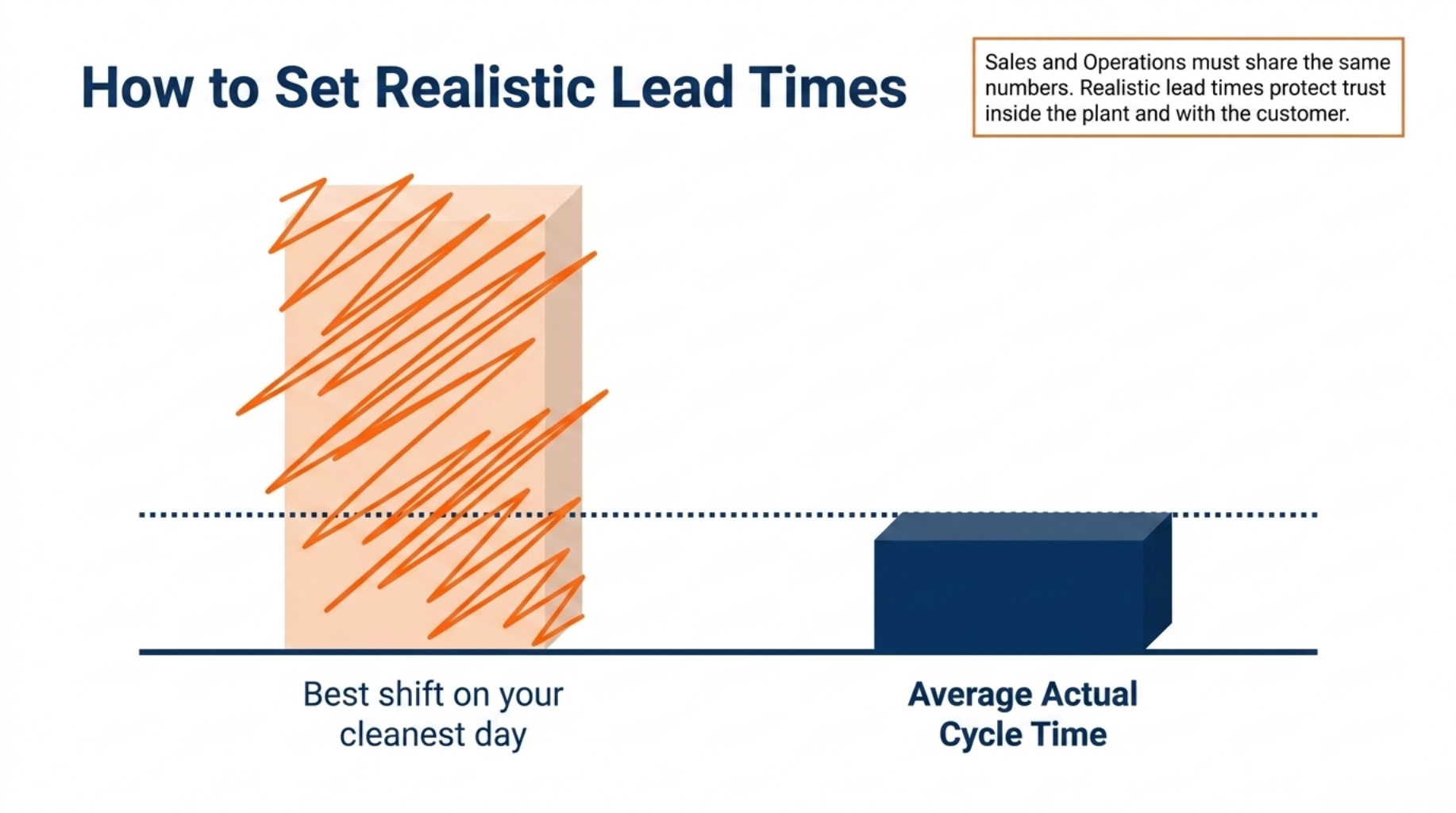
How to Set Realistic Lead Times
Lead times should come from average actual cycle time, not from the best shift you had on the cleanest day. Scheduling guidance in manufacturing points to planning and scheduling as linked activities, so if lead times are unrealistic, the whole plan becomes unstable from the start.
That is why sales and operations need the same numbers. When sales works from updated lead times and real capacity, customer promises stay achievable, and the floor has a fair chance to deliver on time. Realistic lead times protect trust both inside the plant and with the customer.
A good schedule should also protect the people who must run it
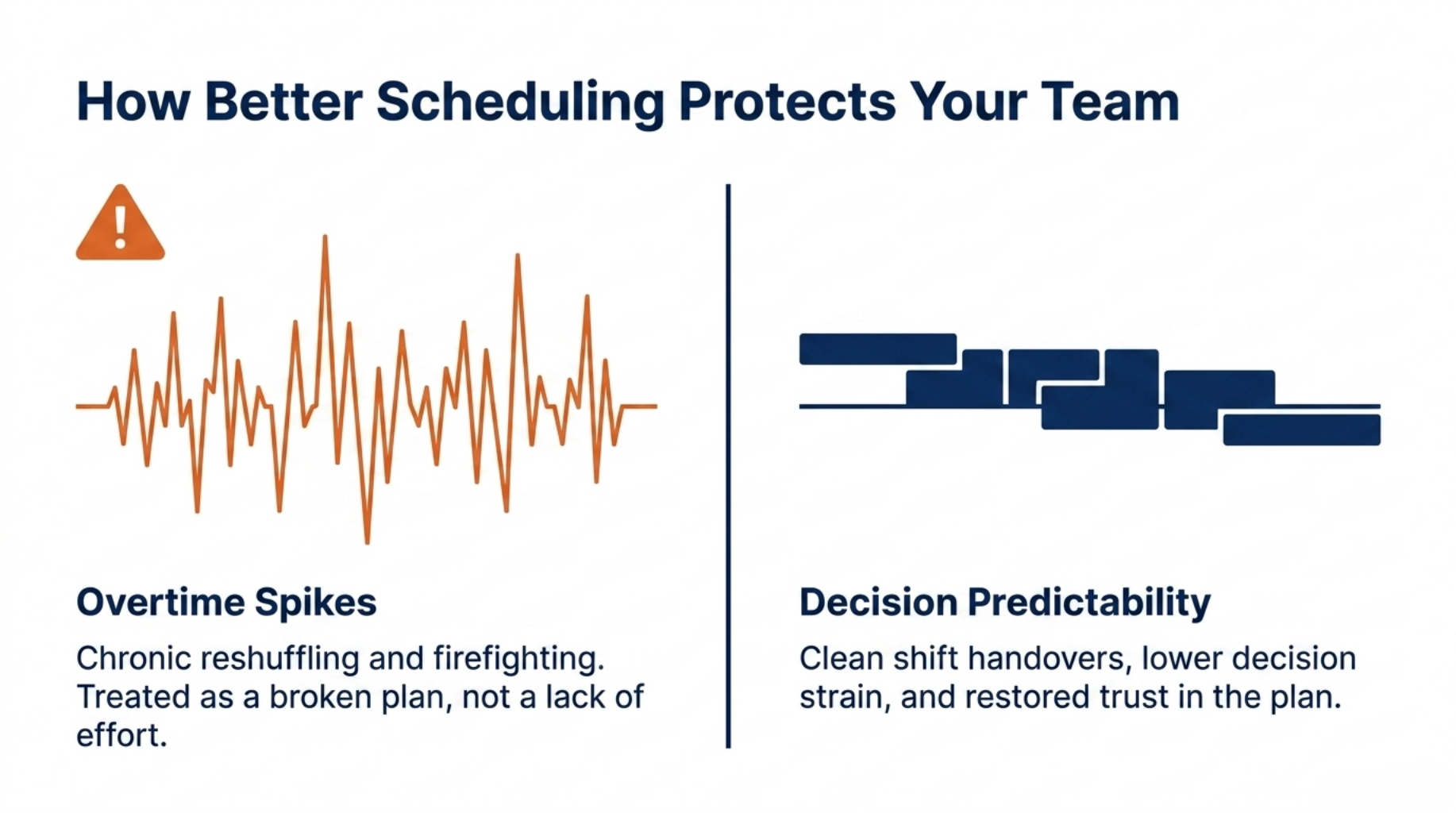
How Better Scheduling Protects Your Team
Bad schedules do not just hurt delivery. They also wear down the team, because chronic overtime and constant reshuffling force supervisors and operators to solve the same avoidable problems every day, which is one of the hidden costs linked to poor production scheduling.
A stable plan lowers that pressure. When work orders are released in a sensible order and capacity is respected, supervisors spend less time firefighting, operators know what is coming next, and shift handovers become cleaner. That kind of predictability reduces decision strain and helps teams trust the plan rather than work around it.
Consider a packaging line that changes the order sequence three times in one shift. The crew keeps stopping to swap materials, the next shift inherits unfinished work, and overtime becomes normal; the real issue is not effort but a schedule that ignored real setup loss and queue depth. Production planning strategies for plant managers should therefore treat overtime spikes as a warning sign that the plan is broken, not as proof that the team needs to push harder.
Once the process is clear, the system supporting it matters.
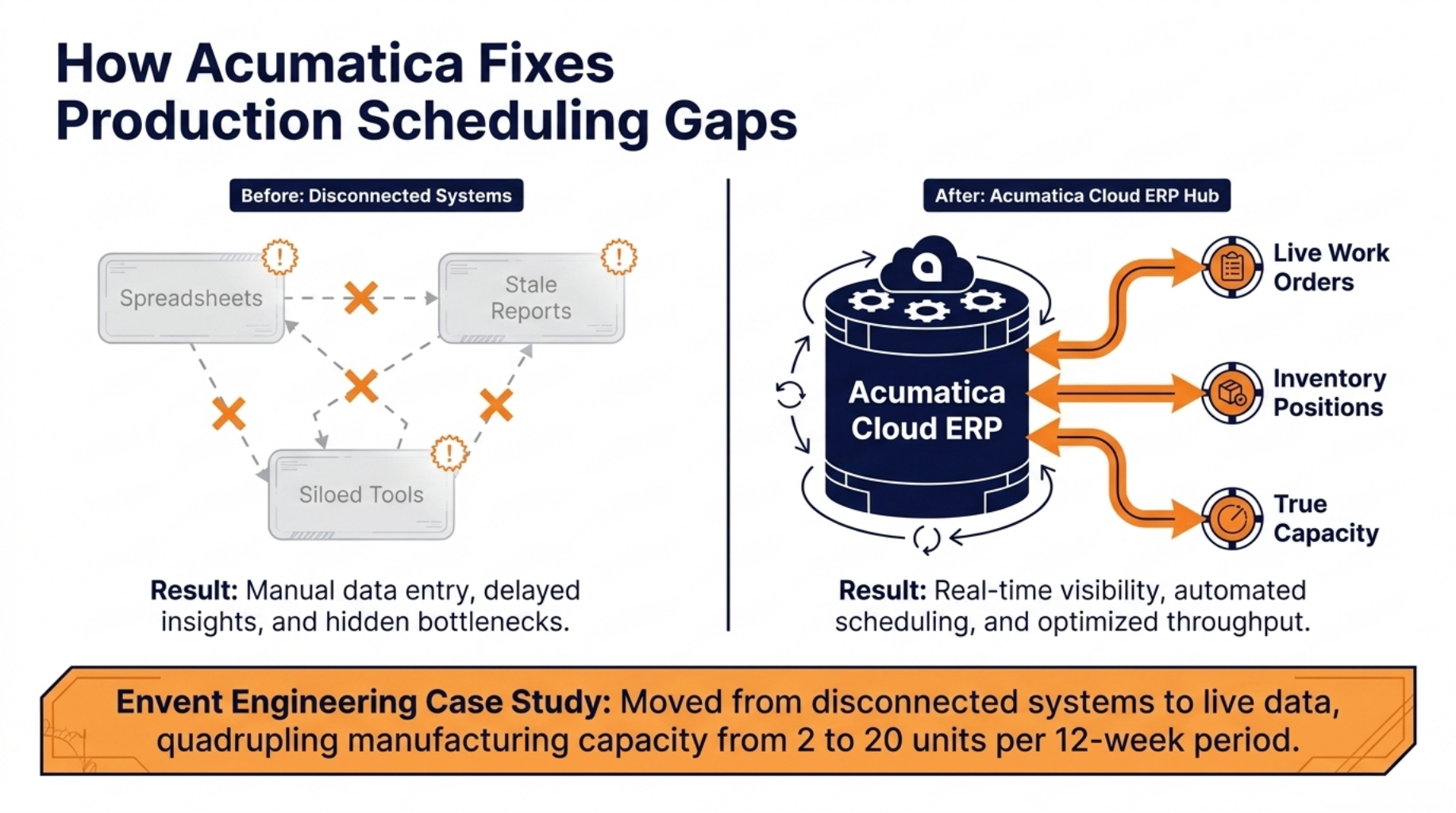
How Acumatica Fixes Production Scheduling Gaps
A good process works better when the system behind it gives live visibility. Acumatica says its cloud ERP helps manufacturers replace spreadsheets and siloed tools with real-time data, and its Envent Engineering case shows what that can look like in practice: after moving away from disconnected systems, Envent gained real-time visibility, streamlined operations, and quadrupled manufacturing capacity from 2 units to 20 units per 12-week period.
That matters for scheduling because visibility changes the quality of every decision. Acumatica’s manufacturing tools are designed to connect work orders, inventory, costs, and shop activity in one platform, which helps planners see actual status instead of working from stale reports. When material positions, queue depth, and order progress are clearer, the schedule becomes easier to adjust before a delay spreads.
The same applies to planning inputs. Acumatica positions its Manufacturing Edition as a connected system to help manufacturers maximise resources, reduce costs, and improve profits, while outside reviews describe features for managing orders, tracking production cycles, and planning complex, time-sensitive work on one platform. In plain terms, that means MRP and scheduling data can support real lead times and smarter manufacturing scheduling instead of guesswork.
A simple example shows the gain. If a planner sees that a work centre is overloaded and a key material has not landed, the job can be moved before the floor wastes hours setting up work that cannot finish, which is the kind of early correction manual systems often miss. That is how software starts to close production scheduling gaps rather than just report them.
The reason many teams stick with the platform is broader than one feature.
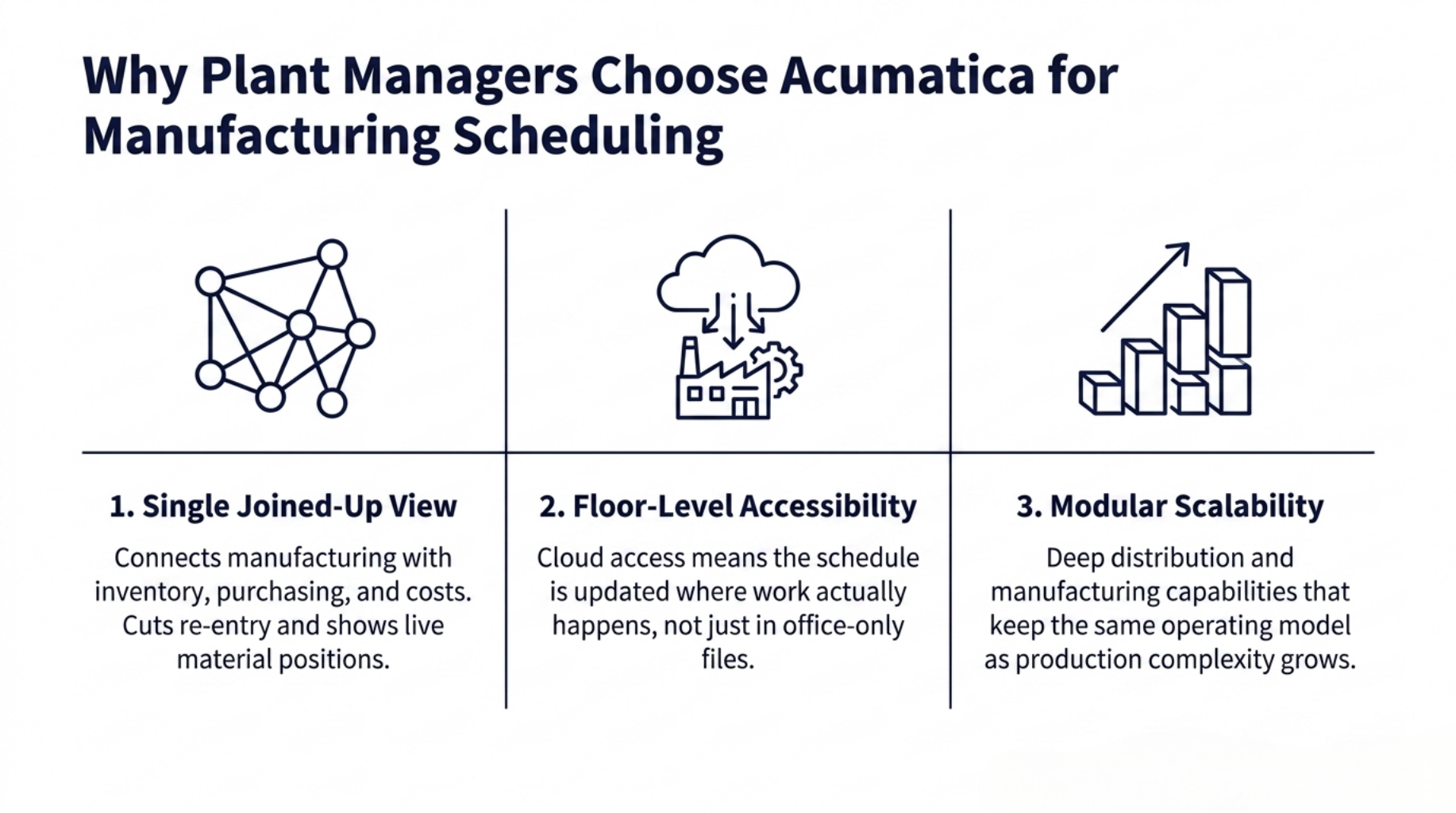
Why Plant Managers Choose Acumatica for Manufacturing Scheduling
Plant managers tend to choose tools that cut re-entry, improve visibility, and fit daily work. Acumatica’s case material and product coverage point to those strengths by linking manufacturing with inventory, purchasing, cost tracking, and wider business data in the same system rather than splitting them across separate tools.
That joined-up view matters on the floor. Envent Engineering used Acumatica to connect global operations, improve cost tracking, reduce inventory carrying costs by millions, and give staff real-time data access, which shows how one system can support faster decisions and cleaner execution across teams. For supervisors, cloud access also means the current schedule is easier to view and update where the work is happening rather than after the fact in an office-only file.
Scalability is another reason. Acumatica describes a modular platform that companies can expand over time, and reviewers note deep distribution and manufacturing capability, which helps firms keep the same operating model as production complexity grows. That makes it easier to improve shop floor scheduling without replacing the core system each time the business adds products, sites, or process steps.
A useful real-world signal is simple: companies stay with systems that make work easier. In the Envent story, the move away from spreadsheets, guesswork, and disconnected databases helped the business gain better reporting, smoother procurement, and stronger control over capacity and inventory, which are the same basics plant managers need for steady on-time delivery. A scheduling tool earns trust when it helps the floor keep promises with less chaos.
That brings the whole argument back to the main point.
Wrapping Up
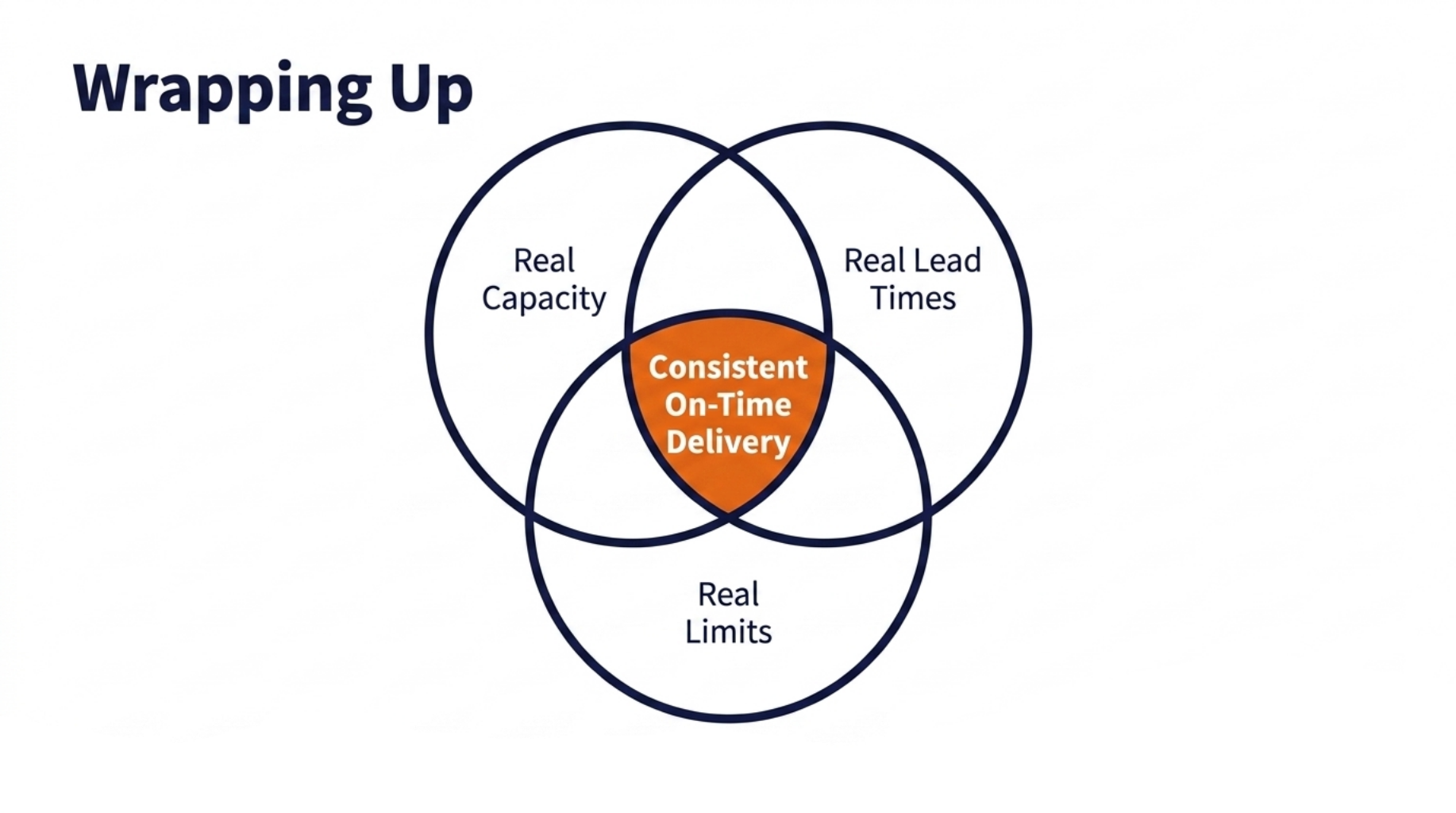
Production scheduling only works when it reflects real capacity, real lead times, and real limits on the floor. Add buffers around the constraint, protect the near-term schedule from constant churn, and use actual performance data to improve the next plan, because those are the moves that lift on-time delivery and cut rework risk.
Acumatica fits this approach by giving manufacturers better visibility across work orders, inventory, and costs, and case evidence from Envent Engineering shows how that can support major gains in capacity and control. Book a free Acumatica demo to see how its Production Management tools can help your plant build schedules that hold.
FAQ
Q1: What is production scheduling in manufacturing?
A: Production scheduling is the process of assigning resources, sequencing jobs, and setting timelines so manufacturing work gets done on time and within capacity.
Q2: How to improve production scheduling in manufacturing?
A: Start by identifying your floor constraint, schedule backwards from ship dates, and insert buffer time before critical work centers to absorb disruptions.
Q3: What causes missed deadlines in manufacturing?
A: Most missed deadlines trace back to schedules built on optimistic capacity assumptions with no buffer for machine downtime, material delays, or rework.
Q4: What is capacity planning in production?
A: Capacity planning is matching the volume and mix of work orders to the actual available hours and throughput of each work center, accounting for downtime and utilisation.
Q5: What production planning strategies work best for plant managers?
A: Constraint-based scheduling, rolling schedule freezes, and weekly schedule attainment reviews are three strategies plant managers use to improve on-time delivery consistently.