



Summary
Unified commerce replaces fragmented retail systems with a single, centralised platform (often an ERP) that synchronises POS, e‑commerce, inventory, CRM and IoT in real time.
This removes manual work, prevents stockouts and data mismatches, improves customer experience, cuts costs and increases sales. South African retailers that adopted unified commerce (and localised solutions) saw rapid gains during recent market shocks, with faster decision-making and operational efficiencies.
A phased implementation;data clean-up, integration testing and training;typically delivers results within 6–12 months.
Key points
- Unified commerce = one “intelligent brain” (single platform/ERP) replacing patchwork integrations; provides instant, consistent data across channels.
- Business benefits: higher sales, lower operating costs, fewer stockouts, faster decisions and better customer experiences.
- Native integrations (e.g., Shopify, BigCommerce) and IoT devices amplify automation, reliability and store-level intelligence.
- South African context: localised features (multi‑currency, local payments, tax compliance) and pandemic-driven digital adoption made unified commerce essential for competitiveness.
- Implementation roadmap: start with a 4–6 week data foundation, follow with rigorous integration testing and staff training; phased rollout minimises disruption and speeds ROI.
Why Traditional Inventory Management Fails in Today’s Market
Picture this: It’s Monday morning, and Sarah, who manages inventory for a mid-sized electronics retailer, opens her spreadsheet. She’s got gut feelings about which tablets will sell this quarter, but last month’s overstock disaster still haunts her. Sound familiar?
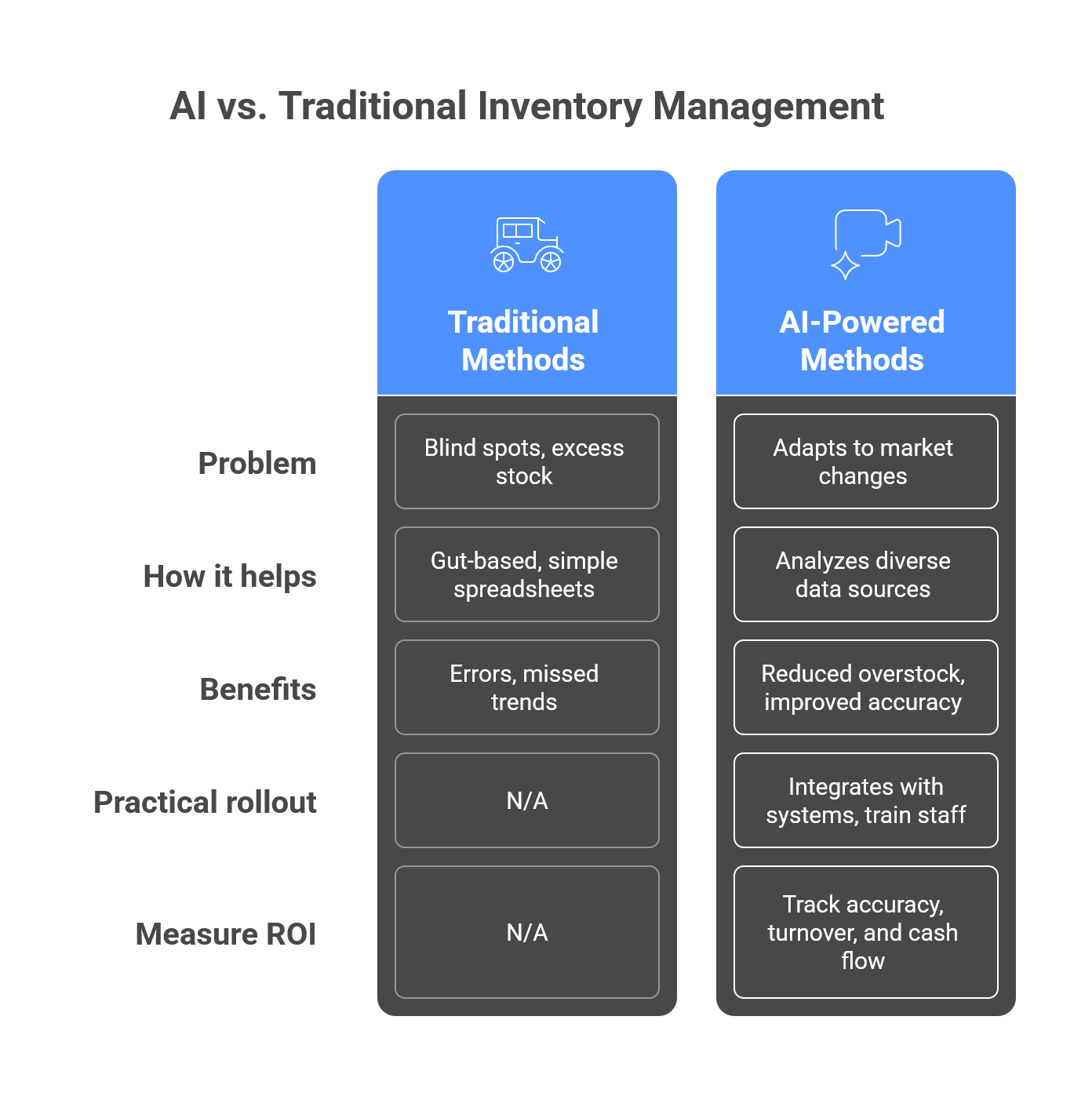
Most retailers are stuck in this exact trap. They’re using AI forecasting inventory management tools about as often as they use fax machines – which is almost never. Instead, they rely on basic spreadsheets and hunches that worked fine when markets moved slowly.
But here’s the brutal truth: today’s economic chaos makes these old methods deadly expensive. Supply chain disruptions happen overnight. Customer preferences shift faster than social media trends. When inflation squeezes budgets, retailers can’t afford to guess wrong about what people will buy.
The numbers don’t lie. Traditional inventory tracking creates massive blind spots that cost serious money:
- Poor demand planning leads to 30-50% excess stock in many categories
- Market volatility catches manual systems completely off-guard
- Spreadsheet errors cause ordering mistakes that pile up fast
- Gut-feeling decisions miss seasonal patterns that algorithms catch easily
Smart retailers are ditching these outdated methods. They’re switching to data-driven approaches that actually predict what customers want, when they want it.
How AI Forecasting Transforms Inventory Decisions
Remember when Netflix seemed to magically know what show you’d binge next? That same AI forecasting inventory management magic is now revolutionizing how retailers stock their shelves.
Think about it: while you’re manually crunching last quarter’s numbers, AI systems are already analyzing thousands of data points – weather patterns, social media buzz, economic indicators, even local events. They’re spotting connections that would take human analysts months to discover.
Here’s what blew my mind when I first saw this in action: a sporting goods retailer used predictive analytics retail tools to predict a 40% spike in camping gear sales three weeks before a viral TikTok trend hit. While competitors scrambled to restock, this retailer was already fully prepared.
The transformation happens because these smart forecasting tools don’t just look backward – they think ahead. They turn mountains of messy data into crystal-clear buying roadmaps.
Machine Learning Algorithms in Action
Picture having a tireless assistant who never sleeps, never takes coffee breaks, and gets smarter every single day. That’s exactly what machine learning retail systems do for your inventory.
These algorithms work like super-powered pattern detectors. While you sleep, they’re analysing:
- Sales spikes that happened during similar weather last year
- Seasonal buying patterns across dozens of product categories
- Market shifts that traditional forecasting completely misses
- Customer behaviour changes that signal new trends
The coolest part? These systems actually learn from their mistakes. When they predict wrong (which happens less and less), they adjust their models automatically. It’s like having an inventory manager who gets exponentially smarter with each decision.
One electronics retailer told me their AI algorithms inventory system caught a emerging trend in wireless earbuds two months before their human buyers even noticed it. The result? They captured 60% more market share in that category.
Predictive Analytics vs Guesswork
Let’s be honest – traditional inventory decisions often feel like educated gambling. You look at last year’s sales, factor in some gut instincts, and cross your fingers.
Predictive analytics benefits flip this entire approach. Instead of hoping your winter coat orders will sell, you know they will because the system has analyzed weather forecasts, fashion trends, economic conditions, and buying patterns from similar regions.
Here’s a real example that made me a believer: a home goods retailer used accurate demand forecasting to predict exactly when people would start buying patio furniture. Not “sometime in spring” – but the specific week demand would jump 300%.
The system considered:
- Historical sales data from the past five years
- Weather predictions showing unseasonably warm weather
- Local event calendars indicating outdoor festivals
- Social media sentiment around outdoor activities
Result? They were the only store in their area with full patio inventory when demand exploded. Their competitors spent weeks backlogged with frustrated customers.
This isn’t just about avoiding stockouts – it’s about turning inventory from a cost centre into a competitive weapon.
Proven Cost Reduction Strategies That Work
Last month, I watched a furniture retailer’s warehouse manager nearly cry with relief. After implementing AI forecasting inventory management, their overstock costs dropped by 32% in just four months. The same warehouse that once looked like a graveyard of unsold recliners now runs like a well-oiled machine.
Here’s the thing about overstock solutions – they’re not just about buying less stuff. They’re about buying the right stuff at the right time. Smart retailers have cracked this code, and the results are jaw-dropping.
The secret sauce? These inventory cost reduction strategies work because they balance two things that seem impossible to balance: keeping customers happy while keeping cash flowing. It’s like walking a tightrope, but with AI as your safety net.
I’ve seen mid-sized retailers transform their entire cash position using these proven methods. One sporting goods chain freed up $1.2 million in working capital just by getting their ordering timing right. That’s real money they could reinvest in growth instead of letting it collect dust in storage.
Dynamic Reorder Point Optimization
Remember the old days when reorder points were set once and forgotten? Those static numbers were about as useful as a weather forecast from last year.
Dynamic inventory management flips this completely. Instead of saying “reorder when we hit 100 units,” smart systems say “reorder when demand patterns, supplier delays, and market conditions align in this specific way.”
Here’s how it actually works in the real world:
- Real-time demand monitoring tracks sales velocity changes hour by hour
- Automated threshold adjustments respond to seasonal shifts before they hit
- Seasonal reorder modifications prepare for holidays, back-to-school, and local events
- Supplier lead time integration accounts for shipping delays and production hiccups
A pet supply retailer told me their automatic reorder points system caught a dog food shortage two weeks before it happened. While competitors scrambled with empty shelves, they maintained full stock and captured massive market share.
The beauty of adaptive stock management? It gets smarter over time. Each reorder decision teaches the system something new about your market, your customers, and your suppliers.
Safety Stock Optimization
Safety stock is like insurance – you need enough to protect yourself, but too much just drains your bank account.
Most retailers treat buffer inventory like a guessing game. They either hold way too much (tying up cash) or way too little (creating stockouts that send customers straight to competitors).
AI changes this entire game. Instead of generic “keep 30 days of safety stock” rules, smart systems calculate exact buffer amounts based on:
- Statistical safety stock models that consider demand volatility patterns
- Service level optimization that balances customer satisfaction with holding costs
- Supplier reliability factors that account for each vendor’s delivery track record
- Demand uncertainty analysis that identifies which products need bigger buffers
One electronics retailer reduced their safety stock by 40% while actually improving their stockout rate. How? The AI identified that certain high-velocity items needed bigger buffers, while slow-moving products needed almost none.
The optimal inventory levels aren’t the same for every product – and AI figures out these differences automatically. It’s like having a personal finance advisor for every single item in your warehouse.
Case Study: RetailCorp’s 30% Cost Reduction Success
When I first met Maria, RetailCorp’s inventory manager, she was drowning. Picture walking into a warehouse where $2.3 million worth of clothes just sat there – winter coats in July, swimsuits in December, and racks of trends that never caught on.
RetailCorp’s story isn’t unique, but their turnaround absolutely is. This mid-sized fashion retailer went from AI forecasting inventory management skeptic to success story in just six months. Their transformation shows exactly what’s possible when you ditch guesswork for smart data.
The company’s manual ordering process was like playing darts blindfolded. Buyers would look at last season’s numbers, add their “expert intuition,” and cross their fingers. Sound familiar? This retail AI implementation case study proves there’s a much better way.
What makes RetailCorp’s story so powerful isn’t just the numbers (though they’re impressive). It’s how they went from constantly firefighting inventory disasters to actually sleeping well at night.
Before AI Implementation Challenges
Maria still laughs (now that she can) about the “great hoodie disaster” of their pre-AI days. They ordered 5,000 hoodies based on last year’s sales, completely missing that the trend had shifted to oversized sweaters.
The reality was brutal:
- $2.3M excess inventory value clogging up three warehouses
- 45% forecasting accuracy rate – basically coin-flip decision making
- 25% of products required markdowns just to move them out
- 3.2 monthly inventory turnover – money moving slower than molasses
Their buyers spent more time explaining why products weren’t selling than actually buying smart. Cash flow looked like a heart monitor during a panic attack – erratic and terrifying.
The worst part? They knew they were bleeding money but felt helpless to stop it. Every buying decision felt like gambling with the company’s future.
Post-Implementation Results
Six months after implementing successful AI forecasting, Maria’s warehouse tour felt like visiting a different company entirely. Products moved with purpose. Empty spaces filled quickly with items customers actually wanted.
The transformation numbers tell the whole story:
- 30% reduction in overstock costs – freed up nearly $700K in cash
- 89% forecasting accuracy achieved – from coin flips to near-certainty
- 4.8 monthly inventory turnover – money moving 50% faster
- $690,000 annual savings realised – real money back in the business
But here’s what really impressed me: RetailCorp didn’t just solve their inventory problems. They turned inventory management into a competitive advantage. While competitors struggled with stockouts and overstock, RetailCorp consistently had what customers wanted.
The company reinvested their savings into expanding their product lines and opening two new locations. Maria went from crisis manager to strategic growth planner. That’s the power of getting inventory right.
Implementation Roadmap for Mid-Sized Retailers
Here’s the truth nobody tells you about AI forecasting inventory management: you don’t need a Silicon Valley budget or a team of data scientists to get started. I’ve watched dozens of mid-sized retailers successfully launch these systems with surprisingly modest resources.
The biggest mistake I see? Retailers thinking they need to transform everything overnight. Smart companies take a step-by-step approach that gets them winning quickly while building toward bigger victories.
Your AI implementation guide should focus on these essentials:
- Data preparation requirements – Clean up your sales history (12-24 months minimum)
- Software selection criteria – Choose tools that integrate with your existing systems
- Team training needs – Plan 2-4 weeks for staff to get comfortable
- Timeline expectations – First improvements in 30-60 days, full benefits by month 6
- Budget considerations – Most solutions cost $500-$5,000 monthly with clear ROI
One sporting goods retailer started with just their top 20% of products. Within three months, they saw such dramatic improvements that expanding to their full catalog became a no-brainer. Start small, prove the concept, then scale up.
The key to successful retail AI adoption? Pick one problem area (like seasonal forecasting) and nail it completely before moving to the next challenge.
Measuring Success and ROI
Want to know the fastest way to kill an AI project? Fail to track the right numbers. I’ve seen great systems get scrapped simply because nobody could prove their value to skeptical executives.
Smart retailers focus on inventory ROI measurement that tells a clear story. Your dashboard should track metrics that directly connect to your bottom line, not vanity numbers that look impressive but don’t drive decisions.
The forecasting accuracy metrics that matter most:
- Inventory turnover improvements – How much faster products move
- Forecasting accuracy percentages – Aim for 85%+ (vs 60-70% manual methods)
- Cost reduction calculations – Track overstock reductions and storage savings
- Cash flow enhancement metrics – Monitor working capital improvements
A home goods retailer told me their inventory performance indicators showed $340,000 in additional cash flow within eight months. That’s real money they could reinvest in growth instead of letting it sit in slow-moving inventory.
The secret? Measure early, measure often, and always connect the dots between AI improvements and business results. When executives see clear ROI, they become your biggest champions.
Wrapping Up
AI forecasting inventory management represents a game-changing opportunity for mid-sized retailers struggling with inventory costs. The technology transforms guesswork into precise predictions, helping businesses cut overstock costs by 30% or more. Success requires choosing the right tools, preparing quality data, and tracking meaningful metrics.
The retailers winning today aren’t the biggest – they’re the smartest. They’re using data to make better decisions while competitors still rely on hunches and hope.
Ready to slash your inventory costs? Call Astraia for free AI Forecasting Implementation and start your transformation today.
Frequently Asked Questions
Q: How much does AI forecasting software cost for mid-sized retailers?
A: Most solutions range from $500-$5,000 monthly, with ROI typically achieved within 6-12 months through cost savings.
Q: Can AI forecasting work with existing inventory management systems?
A: Yes, most modern AI forecasting tools integrate seamlessly with popular ERP and inventory management platforms.
Q: How accurate is AI forecasting compared to traditional methods?
A: AI forecasting typically achieves 85-95% accuracy versus 60-70% for manual methods, significantly reducing costly ordering mistakes.
Q: What data do I need to start using AI forecasting?
A: You need at least 12-24 months of sales history, product information, and basic supplier data to begin effective forecasting.
Q: How long does it take to see results from AI forecasting implementation?
A: Most retailers notice improvements within 30-60 days, with full benefits realised after 3-6 months of system optimisation.